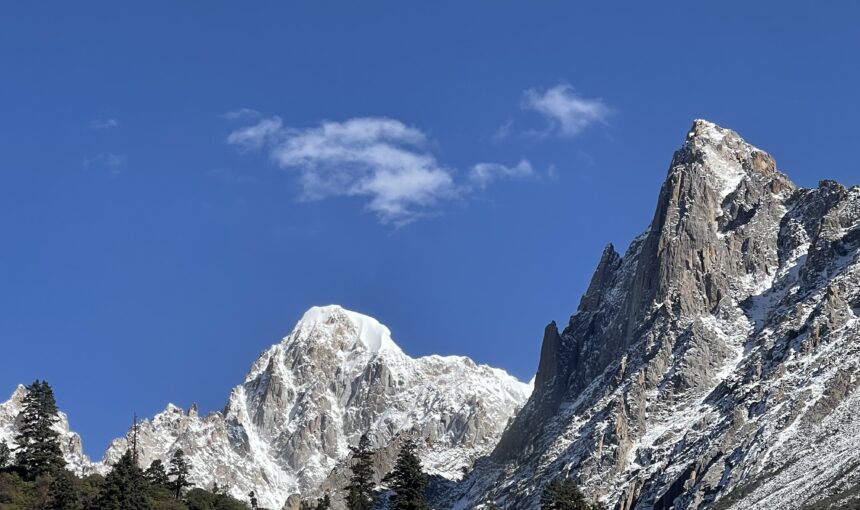
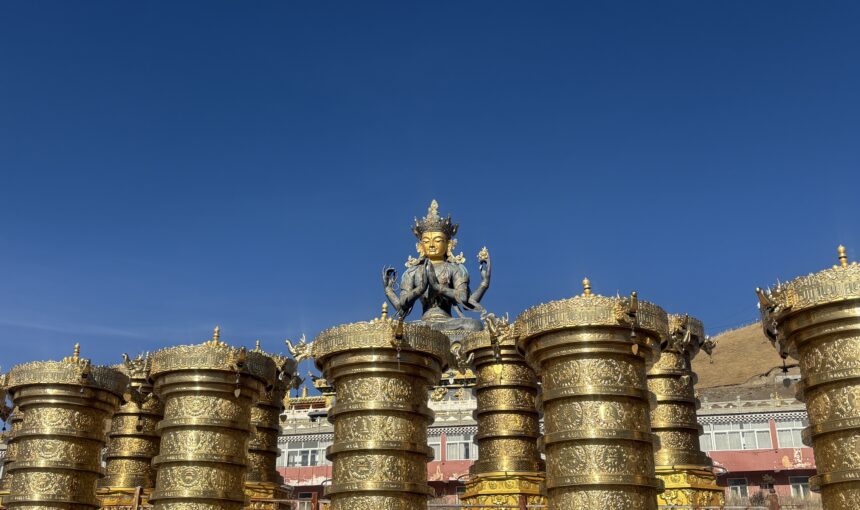
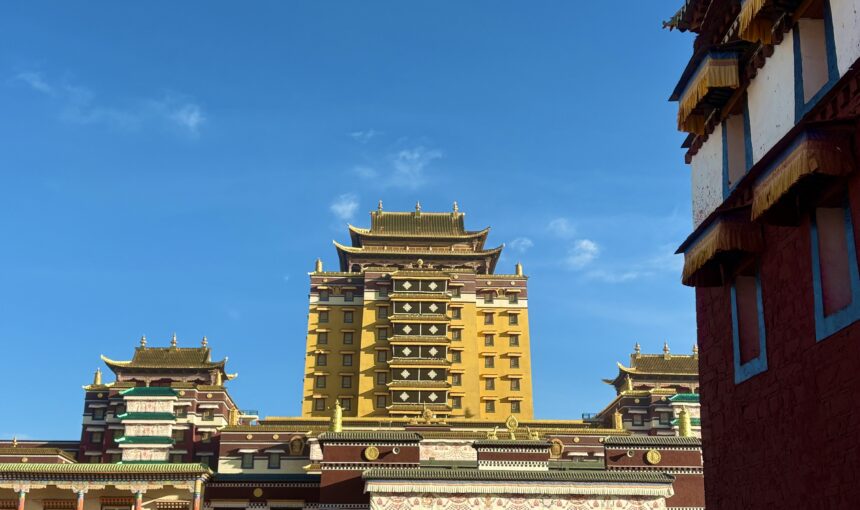
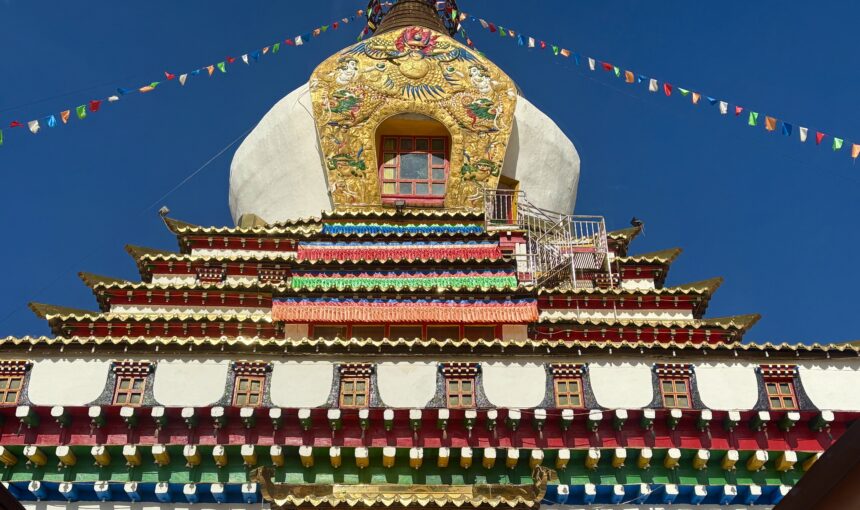
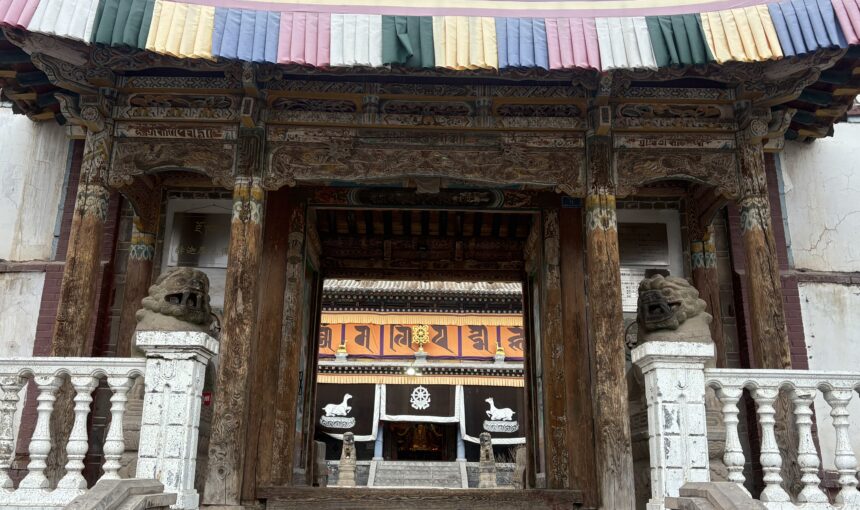
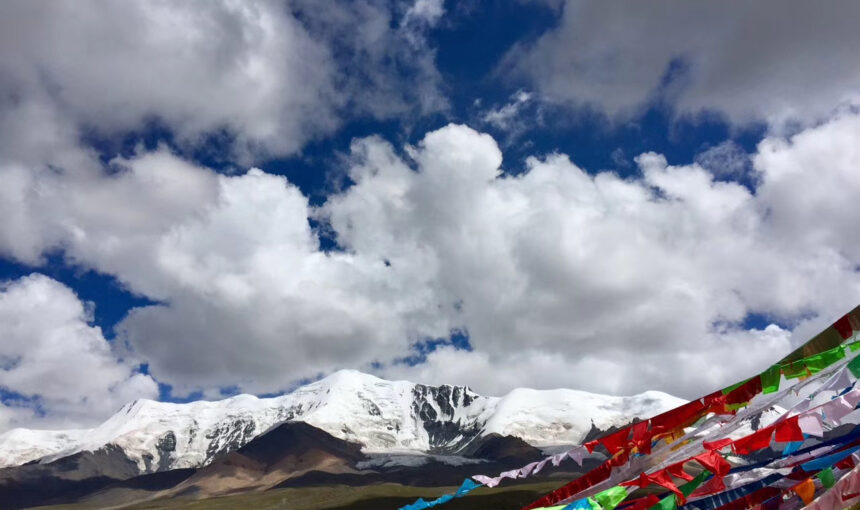
Amnye Machen (also spelled Anyi Machen, Amne Machin) is a legendary sacred mountain range in Golog Tibetan Autonomous Prefecture, Qinghai Province, lying on the eastern edge of the Qinghai-Tibet Plateau. Revered as one of the Four Great Sacred Mountains of Tibetan Buddhism and a paramount protector deity in Amdo Tibetan culture, it combines towering snow peaks, vast alpine grasslands, profound religious traditions and pristine wilderness.
Dopu Valley རྡོ་ཕུ།
Dzongsar Monastery and Dopu Valley sit in the remote Kham region of Sichuan. The ancient monastery thrives as a major Buddhist learning centre, while the nearby Dopu Valley features stunning unspoiled landscapes, clear streams and towering snow mountains. Easy hiking trails wind through the valley. With elevations between 3500m and 4500m, the area draws visitors for its serene scenery, rich religious heritage and peaceful off-the-beaten-path atmosphere.
Taklung Drubling སྟག་ལུང་དགོན་པ
Dalong Monastery (Taglung/Taklung Gompa), Jigdril (Jigdil) Location: Jigdril County (Golog Tibetan Autonomous Prefecture, Qinghai Province, China), on the southern outskirts of Jigdril Town, at an altitude of about 3,600 meters.Affiliation: Nyingma School of Tibetan Buddhism; a major branch monastery of […]
Gomang Monastery རྔ་བ་སྒོ་མང་དགོན་པ།
Ngawa Gomang Monastery, also known as Gemo Si, is a prominent Gelugpa site 13 km northwest of Ngawa County. Founded in 1790 as a branch of Labrang Monastery, it now houses around 600 monks. Its famed Faxi Courtyard holds Guinness records, featuring China’s tallest indoor Maitreya Buddha. The 35-metre Bodhi Stupa preserves precious relics. As a key spiritual and academic hub, it hosts traditional festivals and inherits profound Tibetan Buddhist culture.
Kirti Gompa ཀིརྟི་དགོན་པ།
Ngawa Kirti Monastery (Kirti Gompa) is the largest Gelugpa (Yellow Hat) monastery in Ngawa County, Sichuan, at 3,300 m altitude. Founded in 1472 by Tsongkhapa’s disciple Rongpa Chenakpa, it was rebuilt in 1870. The 18,000 m² complex houses 2,000–2,500 monks and 14 living Buddhas. Its iconic 30 m white Dudul Chorten stupa and grand assembly hall define the skyline. A key spiritual and learning hub, it oversees 30–40 branch monasteries and hosts major festivals like Monlam.
Geden Choeling Gompa དགེ་ལྡན་ཆོས་གླིང་དགོན་པ།
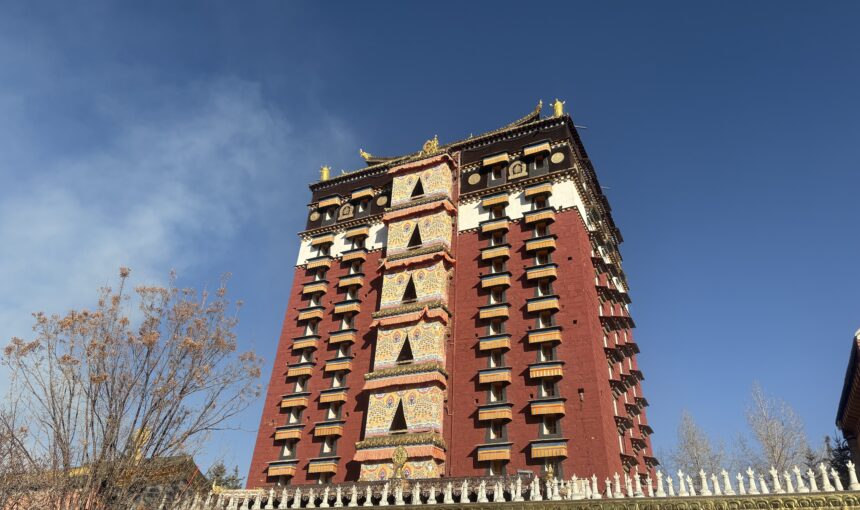
Tso Monastery, officially Geden Choeling, is a historic Gelug site in Hezuo. Founded in 1673, it features traditional Tibetan architecture and a serene prayer hall. Its greatest highlight is the nine‑storey Milarepa Pagoda, a rare shrine dedicated to the revered ascetic master Milarepa. Built in 1777 and later reconstructed, the 40‑metre pagoda houses over 1,700 statues and fine murals. Please keep quiet, walk clockwise and refrain from taking photos inside the pagoda out of respect for local faith.
Shadzong Ritro ཤྭ་རྫོང་རི་ཁྲོད།
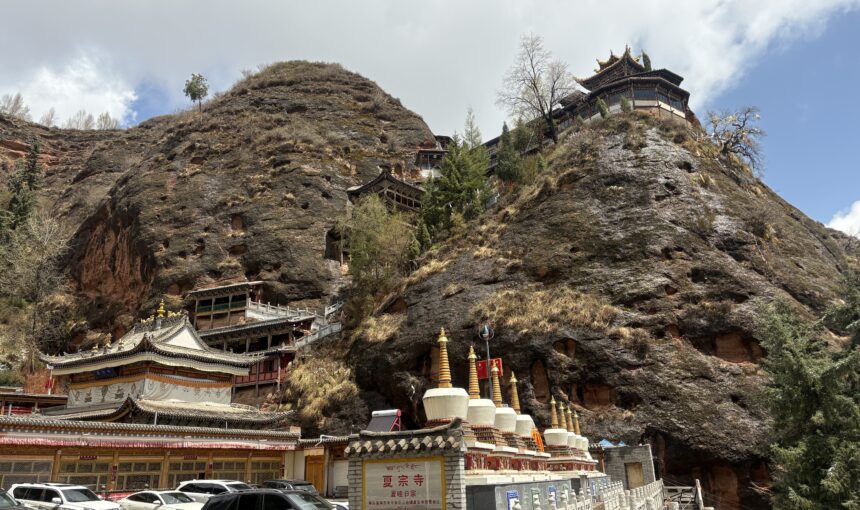
Shadzong Ritro, or Xiazong Monastery, is a revered Gelug mountain hermitage clinging to red sandstone cliffs near Xining, Qinghai. Founded in the early 14th century by the 4th Karmapa, the retreat’s lasting sanctity comes from its link to Tsongkhapa, the Gelug founding master, who received his novice tonsure here aged seven. Legend holds a strand of his buried hair sprouted into a surviving sacred cypress, the site’s most cherished relic
Gönlung Jampa Ling དགོན་ལུང་བྱམས་པ་གླིང་།
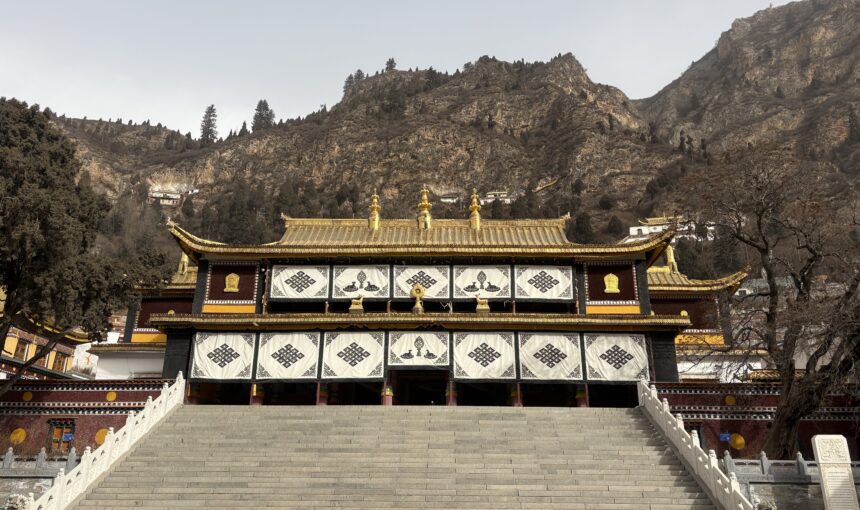
Tiered golden-roofed halls built along a lotus-shaped mountain basin, blending Tibetan monastic framework and Han imperial decorative craftsmanship. Highlights include the grand Main Assembly Hall, outdoor bronze Tara statue, ancient white stupa cluster and cliffside meditation grottoes scattered on surrounding slopes.
Quzang (Chuzang) Monastery ཆུ་བཟང་དགོན་པ།
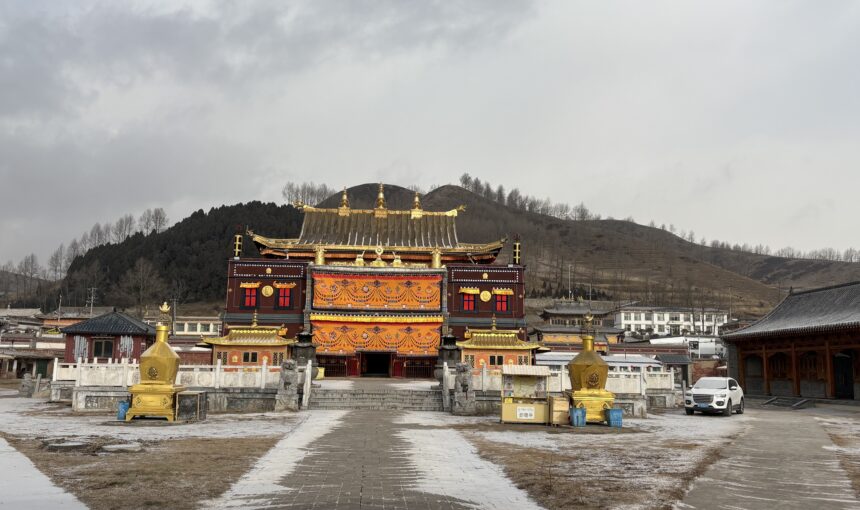
Standing on open grasslands outside Huzhu near Xining, Quzang Monastery is a prestigious Amdo Gelug shrine built in 1649 with Qing imperial recognition. Once famed for its gilded Thousand-Buddha Hall and imperial Nine-Dragon Wall, the temple endured severe destruction before systematic restoration from the 1980s. Framed by pine-cloaked hills and wetlands, it remains a vital local pilgrimage centre blending Han imperial craftsmanship and traditional Tibetan monastic architecture.
Serkog Monastery གསེར་ཁོག་དགོན་པ།
Tucked in forested mountain valleys near Xining, Serkog Monastery ranks among Amdo’s four historic great Gelug shrines. Established in the early Qing Dynasty with imperial authorization, it once thrived as a pivotal Buddhist learning hub governing numerous affiliate temples. Its signature clustered multi-tiered white stupas stand out against green hills, embodying harmonious fusion of Han and Tibetan building craft and remaining a revered pilgrimage landmark of eastern Qinghai.