Basic Profile
Official Tibetan full name:Gaden Dhondupling(Dondupling = phonetic spelling);Chinese:噶丹东竹林寺
Location: Shusong Village, Benzilan Town, Deqin County, Diqing Prefecture, Northwest Yunnan, beside China National Highway G214; altitude 2,850–3,000 m, nested between Baima Snow Mountain & Jinsha River valley
Sect: Gelug (Yellow Hat) Tibetan Buddhism, one of the famous Thirteen Great Gelug Monasteries of Kham (Kham Thirteen Lin)
Name meaning: Dhondupling = Land of Accomplishment & Benefit for All Beings; Dongzhulin literally “Temple of Perfect Merit”
History
Founded 1667 (Kangxi 6, Qing Dynasty), original name Chongchong Cuoka Lin (Crane Lake Monastery), initially a Kagyu sect temple with merely 16 resident monks.
In 1674, converted to Gelug, merged with 7 nearby small monasteries; the 5th Dalai Lama bestowed formal title Gaden Dhondupling.
Peak prosperity in late Qing: over 700 monks + 10 living Buddhas, core religious hub of southern Kham & ancient Tea-Horse Road transit shrine.
Severe damage in mid-20th century; only main hall survived, large-scale reconstruction finished in 1985; listed as Yunnan Provincial Cultural Relic Protection Site in 2003.
Architecture & Core Highlights
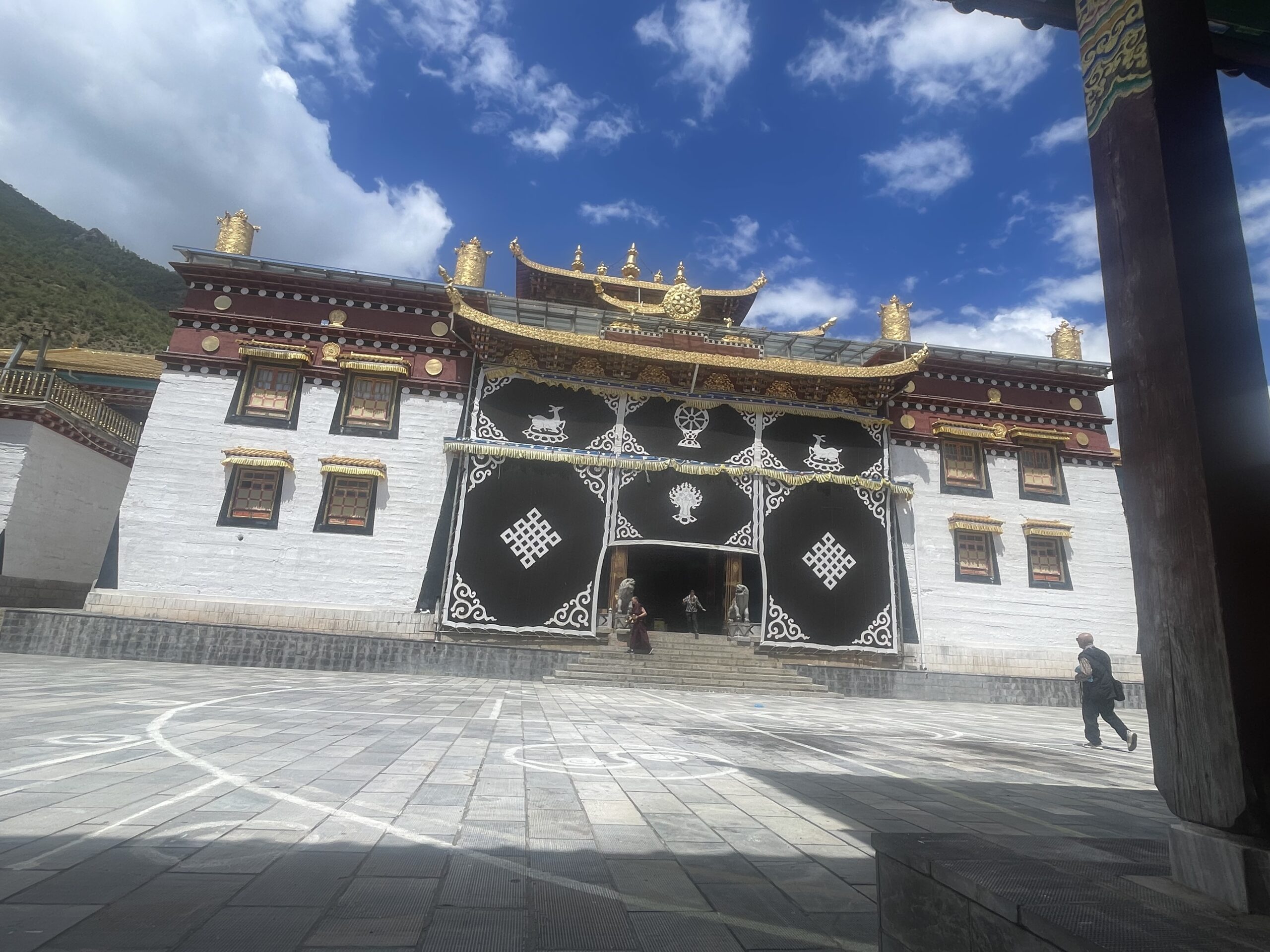
Layout: Hill-clustered Tibetan compound, whitewashed outer walls, crimson inner walls, gilded copper roofs; the central Grand Scripture Hall is four-storey timber structure supported by 82 giant ancient wooden pillars.
Treasures inside: Well-preserved Qing-dynasty frescoes (over 100㎡), antique Thangka scrolls, gilt Buddha statues, ancient Buddhist scriptures.
600-meter long outdoor prayer wheel corridor lined with hundreds of bronze prayer cylinders (key pilgrimage spot).
Surroundings: Panoramic views across Hengduan Mountains, Baima Snow Mountain peaks and Jinsha River gorge from hillside grounds.
Travel Guide
Opening: Daily 08:00–18:00, free admission
Transport:
40min drive from Deqin downtown; 105km north from Shangri-La (Zhongdian) along G214滇藏公路
Major stop on Meili Snow Mountain trekking & Yunnan-Tibet overland route
Local custom:
Enter halls barefoot, circle buildings clockwise; no indoor photography allowed; early morning monk chanting (6:00–8:00) highly recommended