Full Tibetan Name: Kirti Kalari Gon Tashi Lhundrub;Chinese: 格尔登寺
Affiliation: Gelugpa (Yellow Hat) school of Tibetan Buddhism
Location: Northwest edge of Ngawa (Aba) Town, Ngawa Prefecture, Sichuan, China;altitude 3,290 m
Status: Largest Gelugpa monastery in Ngawa County; one of the most important in the Kham & Amdo regions
History & Foundation
Origins (1472): Founded by Rongpa Chenakpa, a direct disciple of Tsongkhapa (1357–1419), the founder of the Gelugpa school.
Relocation & Reconstruction (1870):
The original site was in present-day Zoigê County.
In 1870 (Tongzhi 9th year), the 8th Kirti Rinpoche moved and rebuilt the monastery at its current location, merging an older temple (Donggou Temple).
Key Expansion:
1913: Completed the Shedra (College of Buddhist Philosophy).
1896: Established the Tantric College.
1926: Added the Kalachakra College.
Modern Role: Served as a headquarters for the Red Army during the Long March.
Layout & Architecture (18,000 m²)
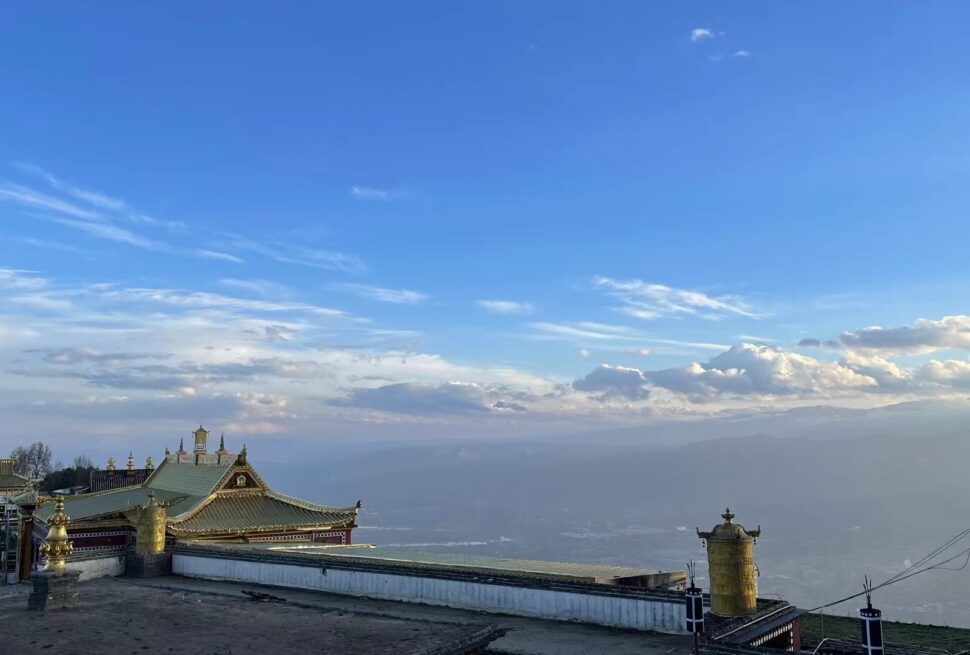
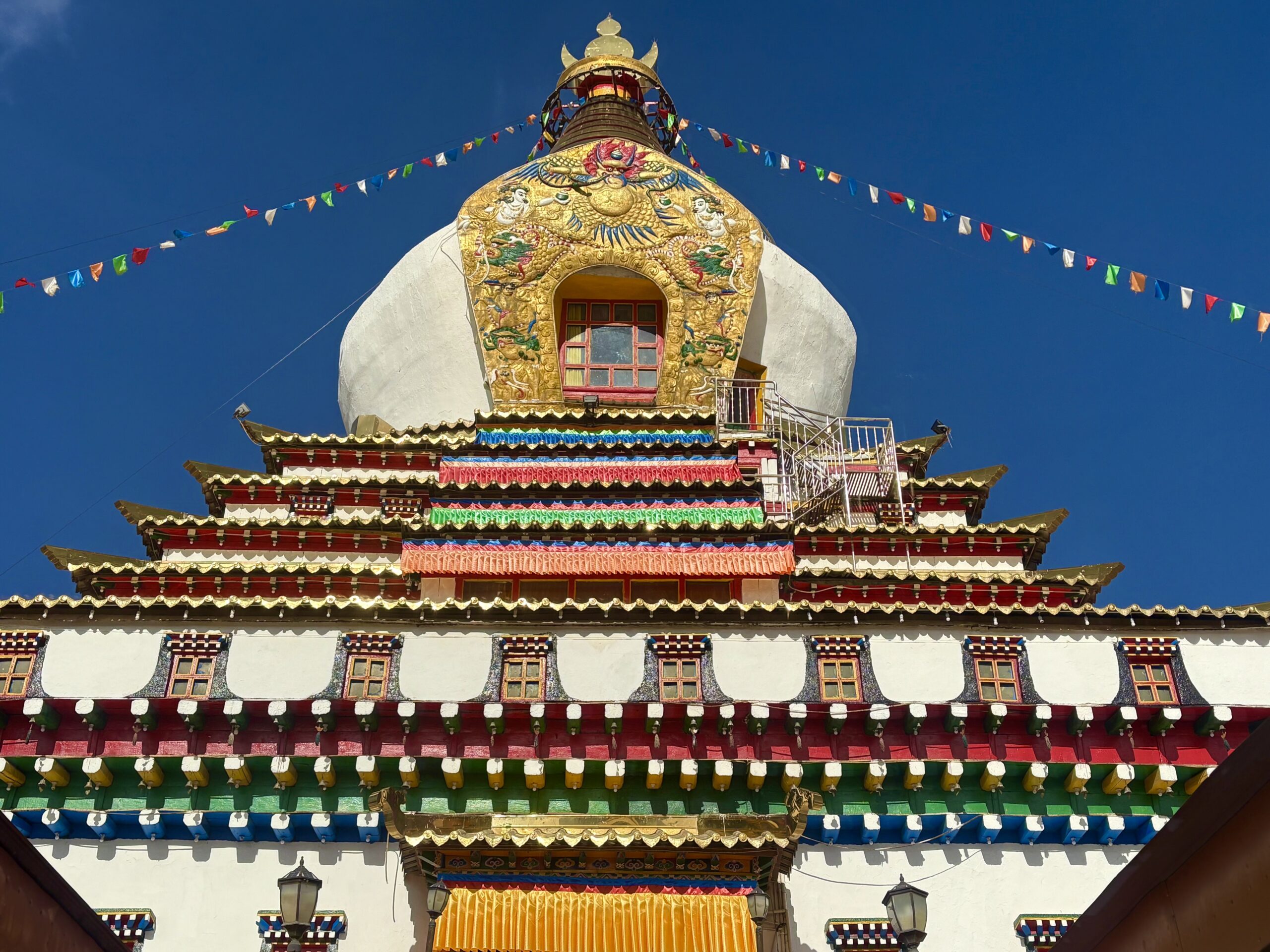
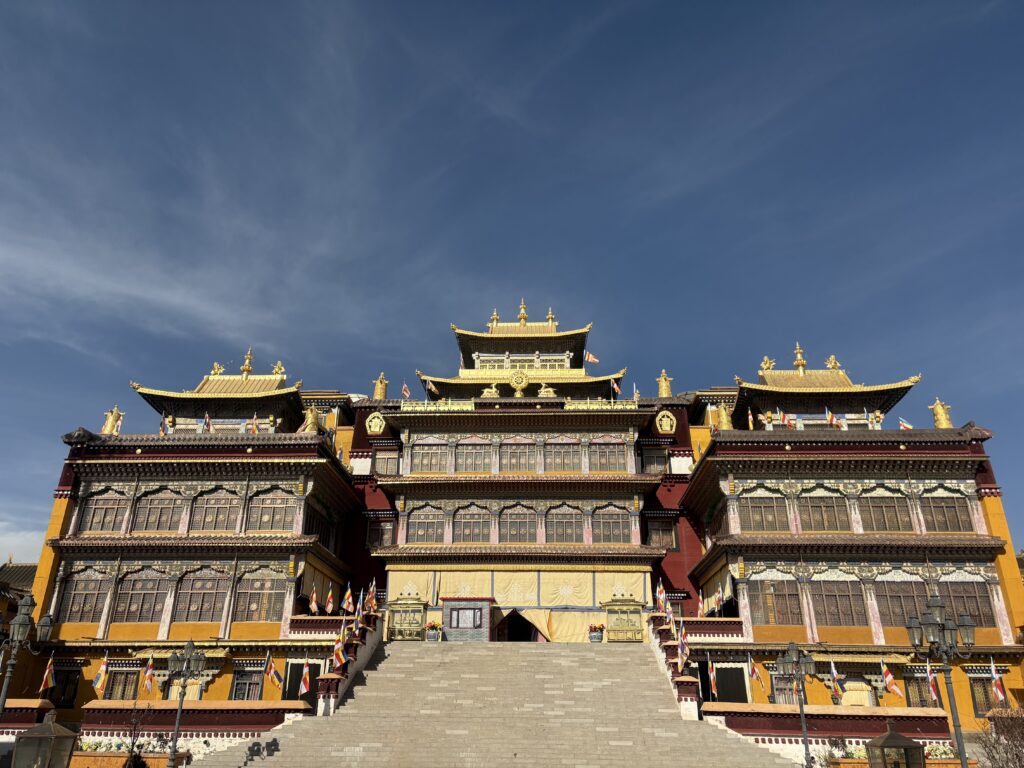
The complex follows traditional Tibetan design with red walls, golden roofs, and white stupas, organized around a central courtyard.
Main Structures
Great Assembly Hall (大经堂):
The heart of the monastery; 120 massive pillars; capacity for 3,000+ monks.
Walls adorned with murals of the Four Heavenly Kings and the Six Realms of Samsara.
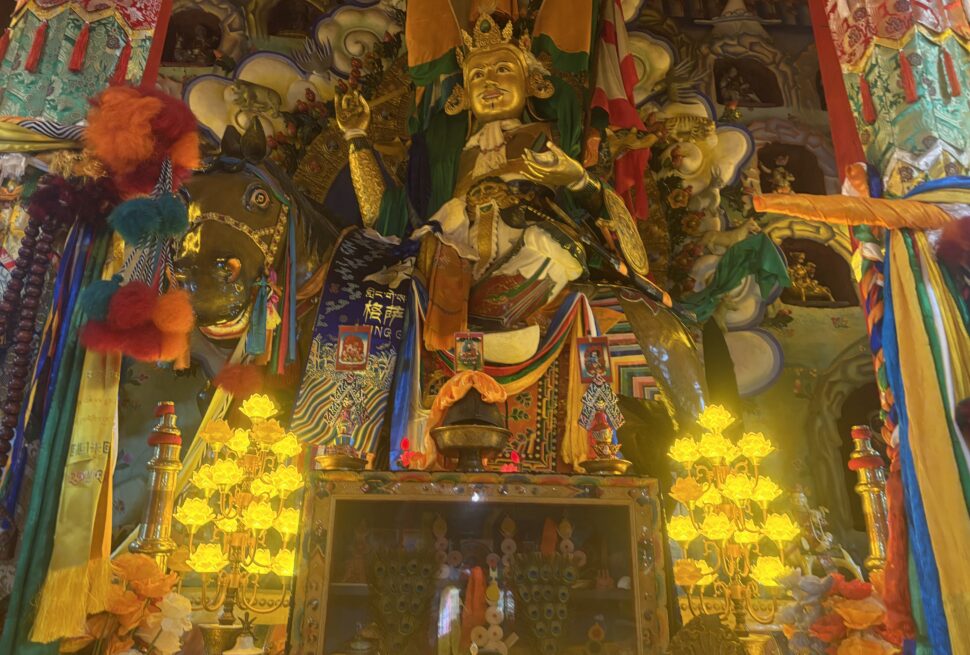
Houses statues of Shakyamuni, Tsongkhapa, and other deities.
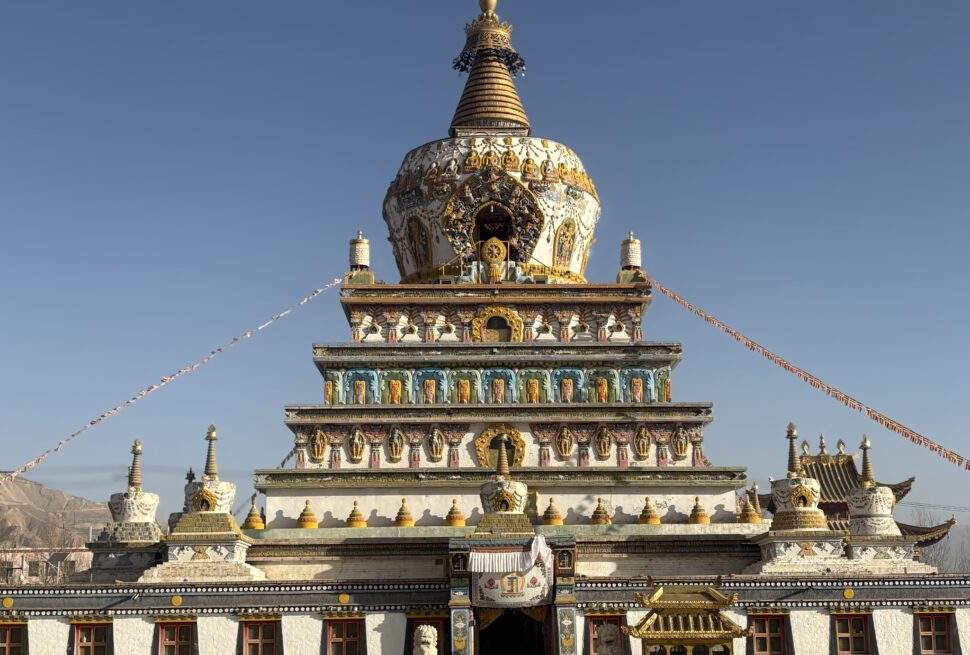
Dudul Chorten:
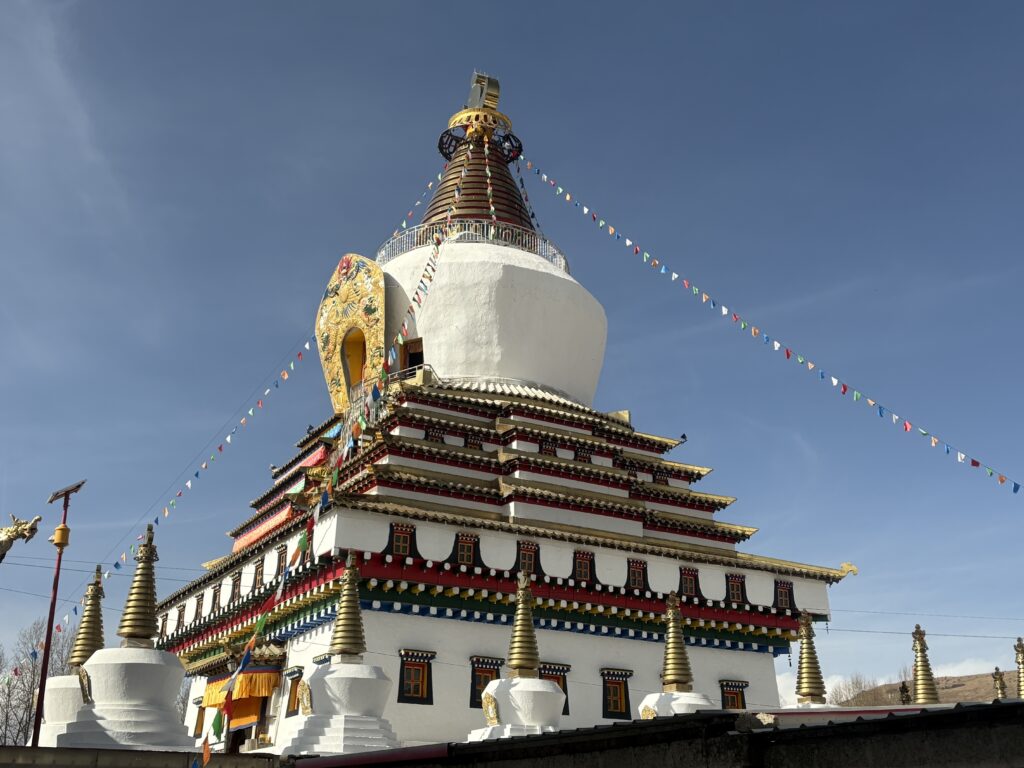
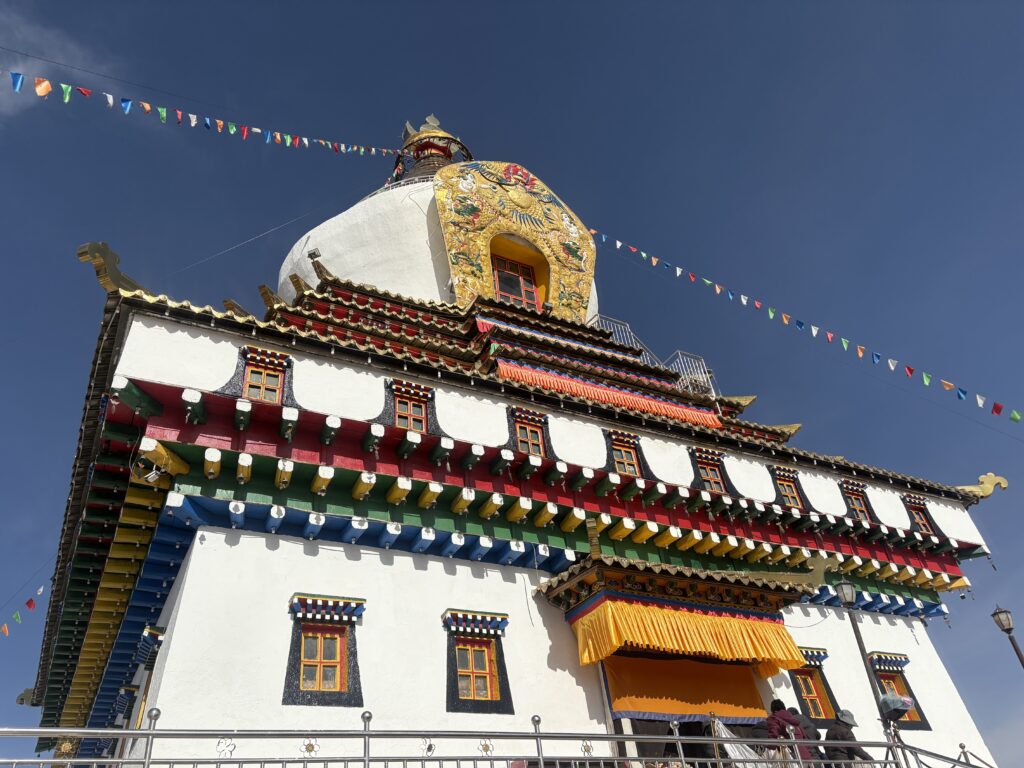
Iconic 49 m-high white stupa with a 25 m square base.
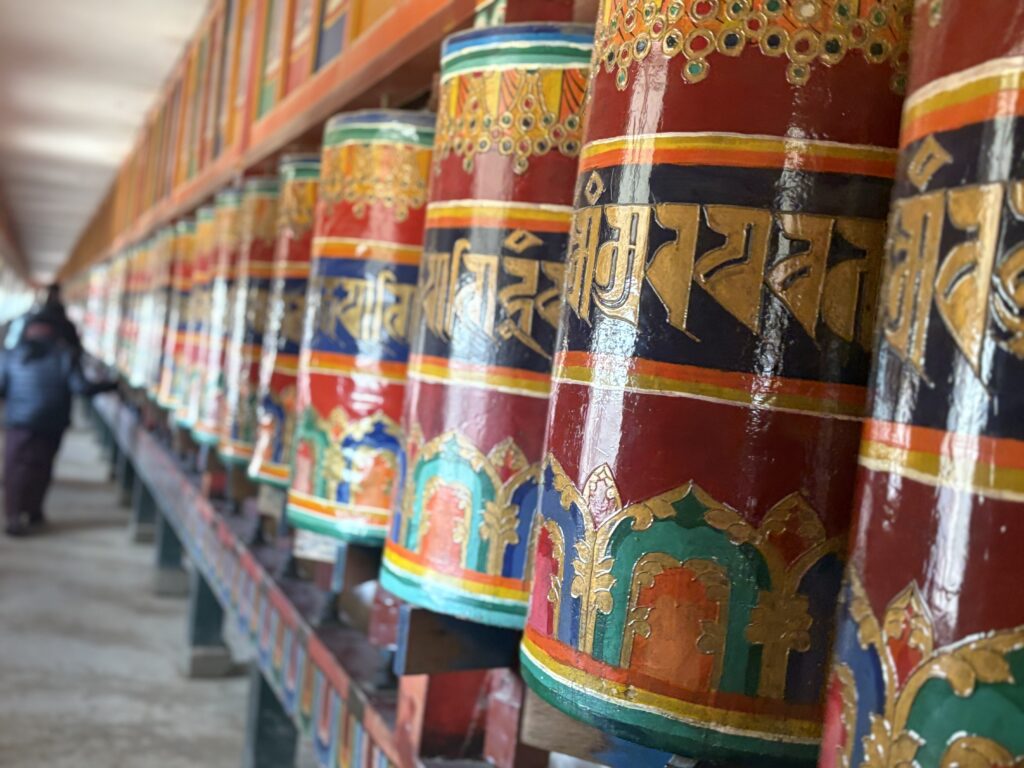
Surrounded by 24 smaller stupas and a 200 m-long prayer wheel corridor with hundreds of wheels.
Colleges: Four main colleges for higher Buddhist studies:
Shedra (Philosophy): Focus on sutras and logic.
Tantric College: Study of esoteric rituals.
Kalachakra College: Astrology and time-cycles.
Medical College: Tibetan medicine.
Lama Quarters: 14 registered Lamas (Rinpoches), each with a private residence.
Monastic Life & Administration
Monk Population: 2,000–2,500 resident monks; ages 8–80.
Leadership:
Kirti Rinpoche: Supreme spiritual head (reincarnate lineage).
Wönpo: Administrative chief (hereditary position, historically).
Daily Routine:
Dawn: Chanting in the Great Hall.
Morning/Afternoon: Classes (philosophy, debate, memorization).
Evening: Debates (public, often open to visitors).
Festivals & Rituals
Monlam Prayer Festival (正月): Largest annual event; mass chanting, torch processions, and thangka displays.
Butter Lamp Festival (正月十五): Elaborate butter sculptures (torma) displayed in the courtyard.
Cham Dances (夏季): Masked dances depicting the triumph of good over evil.
Visitor Information
Entry: Free (no ticket).
Hours: 7:00 AM – 7:00 PM (best 9–11 AM or 4–6 PM).
Etiquette:
Dress modestly (shoulders/knees covered).
No photos inside halls; ask permission for monks.
Always clockwise around stupas/prayer wheels.
Remove shoes before entering chapels.
Nearby:
Nangzhik Gompa: Largest Bön monastery in the world (3 km away).
Setenling Gompa: Jonangpa school monastery.
Significance
Spiritual Hub: The primary center for Gelugpa practice in the Ngawa region.
Cultural Treasure: Preserves rare scriptures, thangkas, and ancient rituals.
Pilgrimage Site: Draws pilgrims from across Tibet, Qinghai, and Sichuan.
Ngawa Kirti Monastery (Kirti Gompa) is the largest Gelugpa (Yellow Hat) monastery in Ngawa County, Sichuan, at 3,300 m altitude. Founded in 1472 by Tsongkhapa’s disciple Rongpa Chenakpa, it was rebuilt in 1870. The 18,000 m² complex houses 2,000–2,500 monks and 14 living Buddhas. Its iconic 30 m white Dudul Chorten stupa and grand assembly hall define the skyline. A key spiritual and learning hub, it oversees 30–40 branch monasteries and hosts major festivals like Monlam.