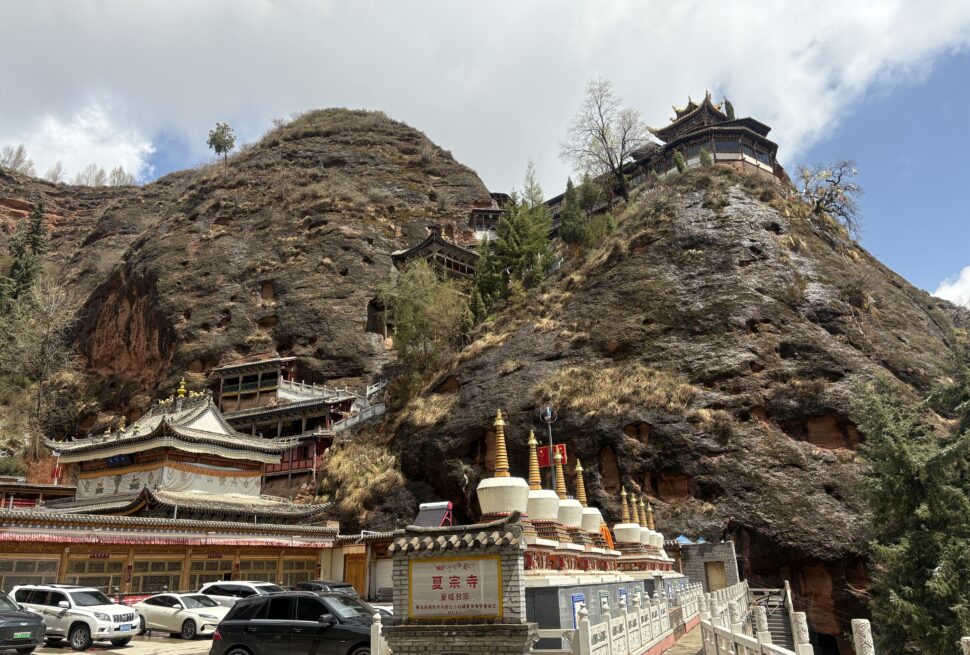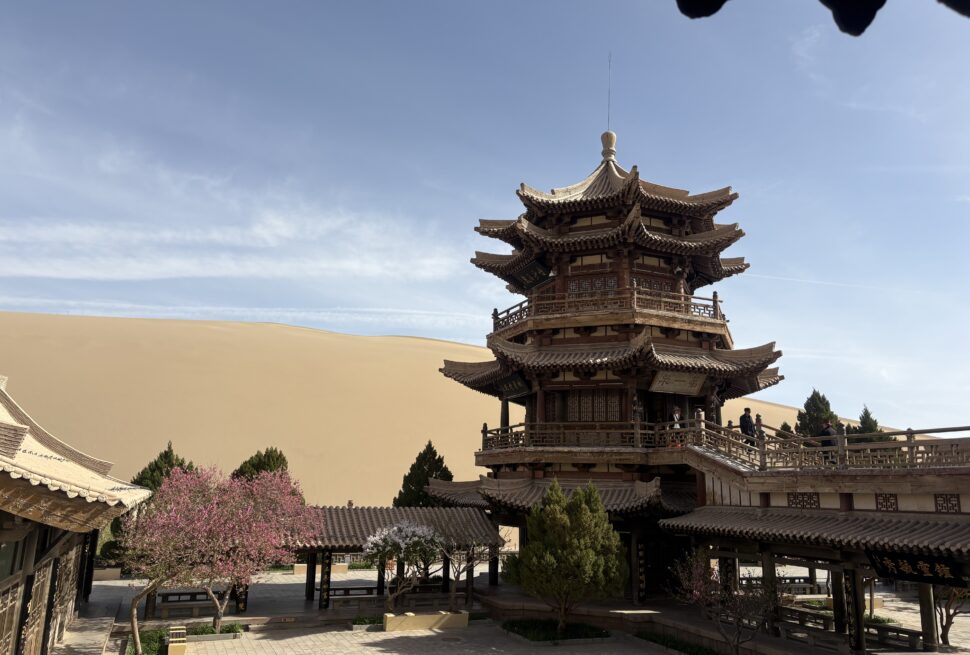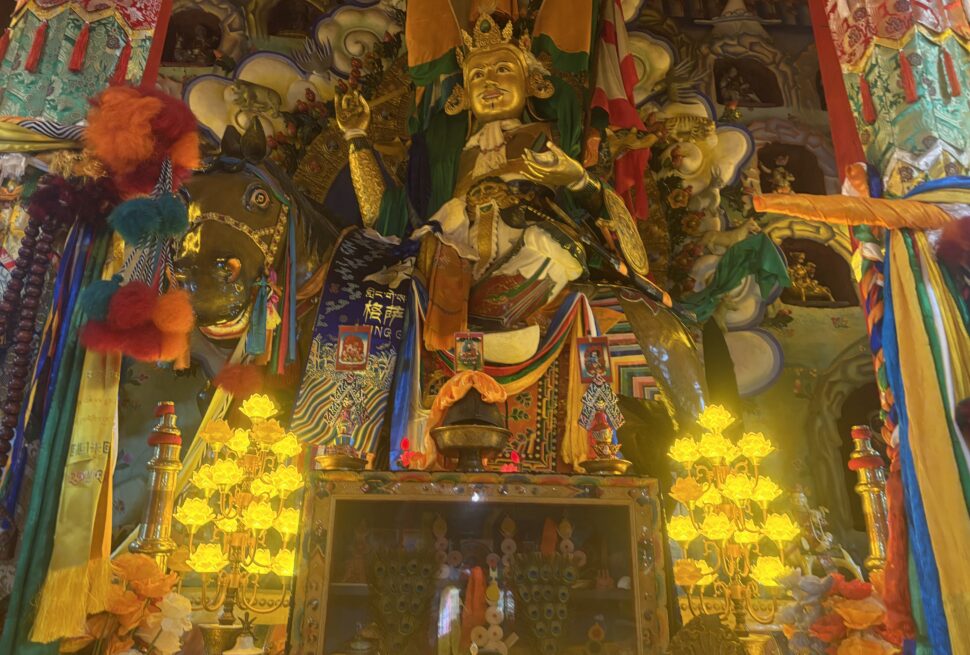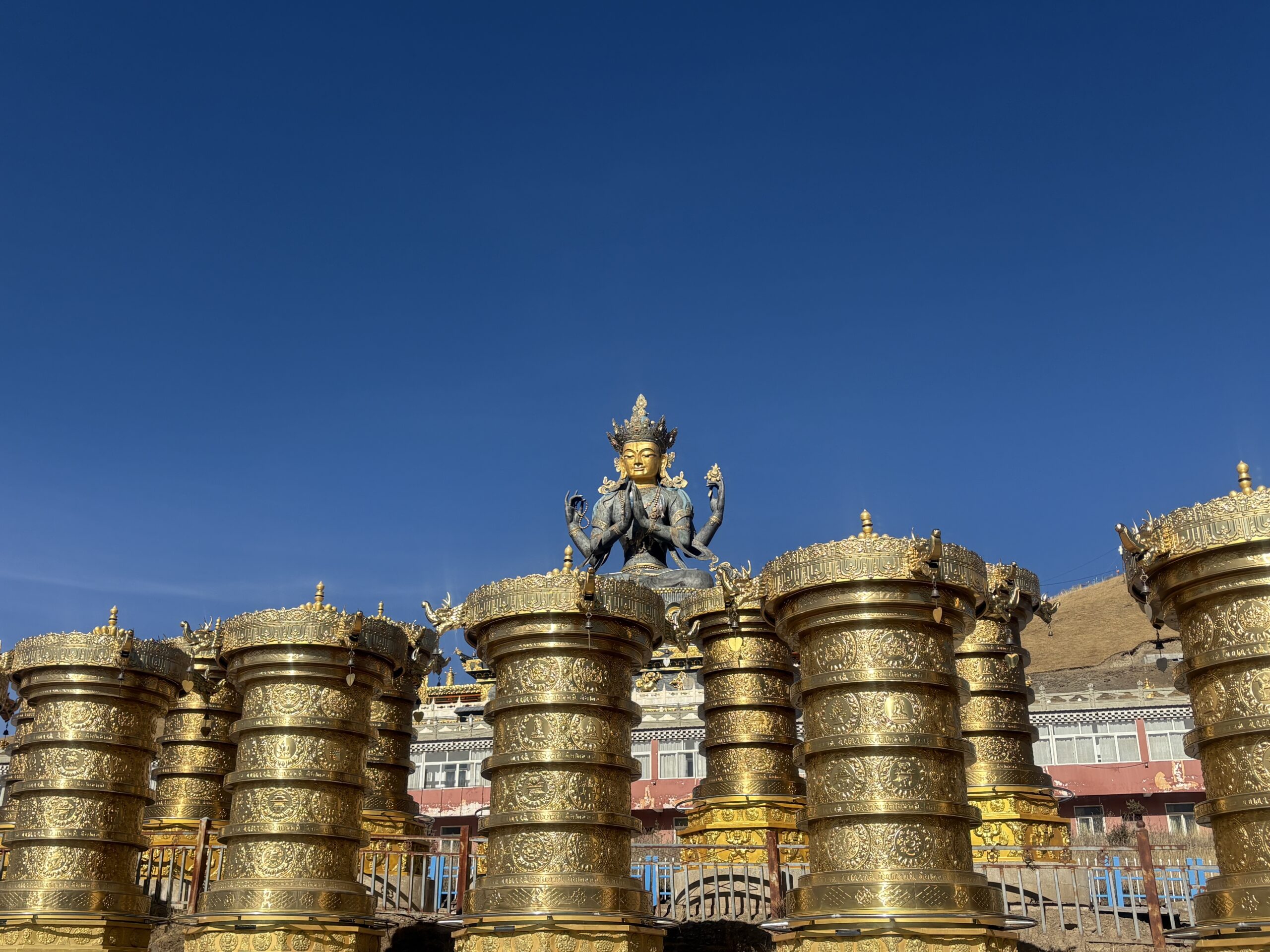
Dalong Monastery (Taglung/Taklung Gompa), Jigdril (Jigdil)
Location: Jigdril County (Golog Tibetan Autonomous Prefecture, Qinghai Province, China), on the southern outskirts of Jigdril Town, at an altitude of about 3,600 meters.
Affiliation: Nyingma School of Tibetan Buddhism; a major branch monastery of Pelyul (Baiyu) Monastery (Sichuan), one of the six principal Nyingma mother monasteries in Khams.
Alternative Names: Dalong Gompa, Taglung Monastery, Taklung Drubling; Tibetan: སྟག་ལུང་དགོན་པ། (stag lung dgon pa).
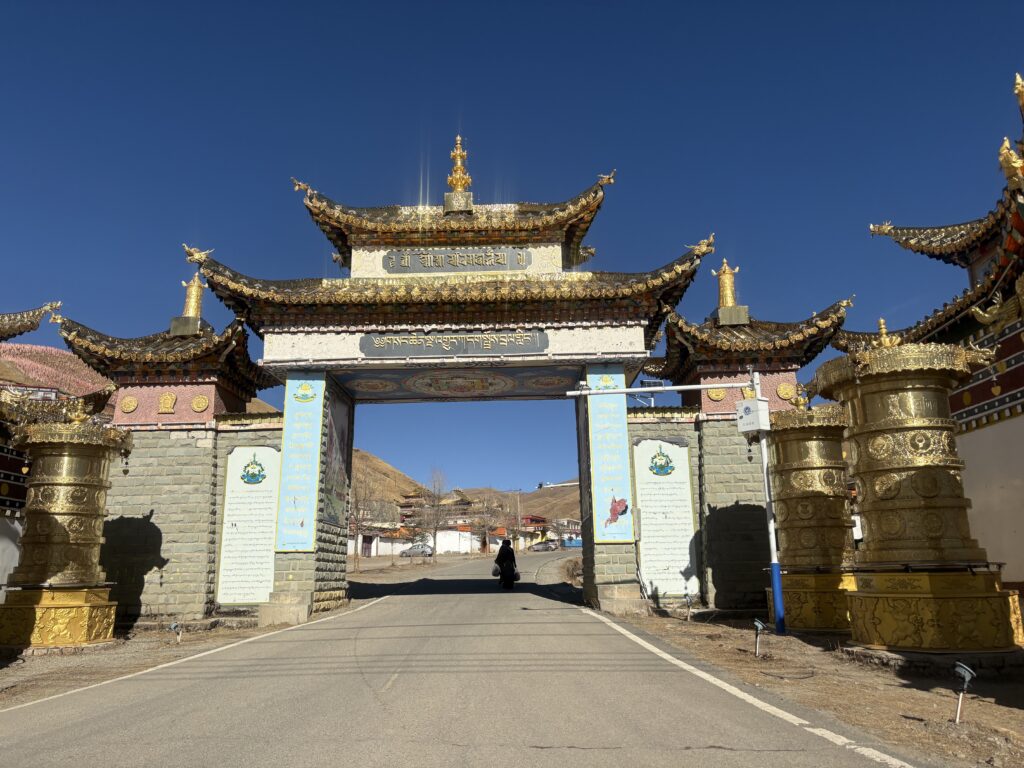
History & Foundation
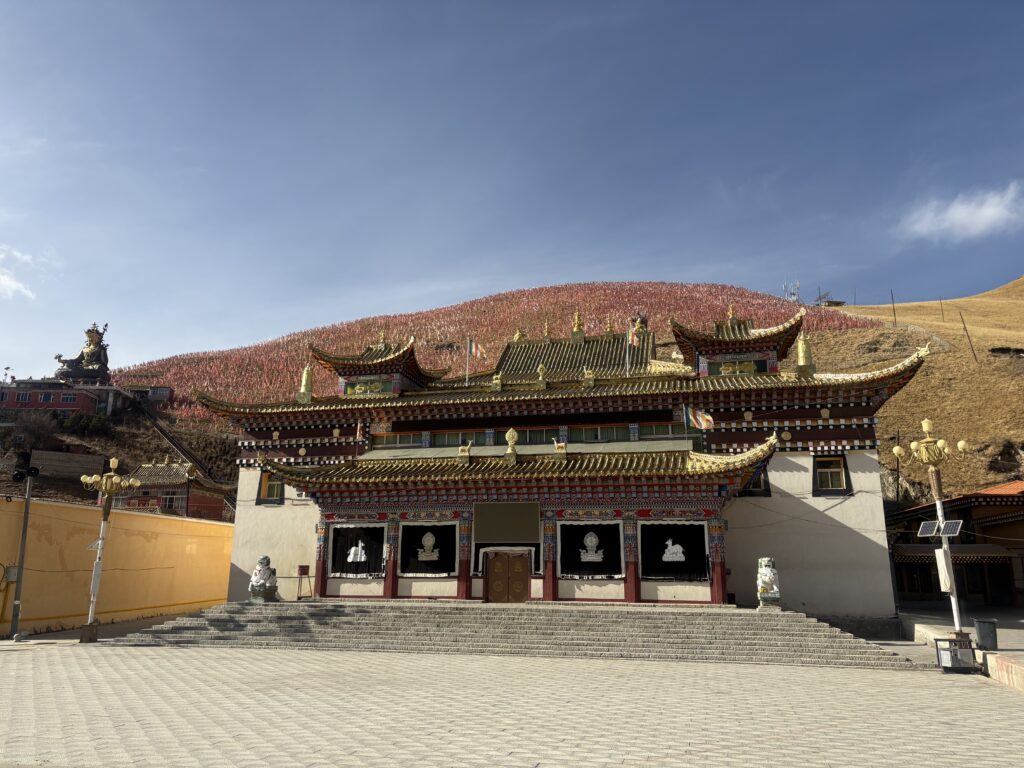
Founded in the late 19th century by disciples of Dudjom Lingpa (1835–1904), a revered Nyingma tertön (treasure revealer) and master.
Established as a regional center for Nyingma practice, particularly for the Dudjom Tersar lineage (revealed teachings).
Revived and expanded in the late 20th century under the guidance of Khenpo Jigme Phuntsok (1933–2004), the renowned Nyingma master of Larung Gar.
Survived the Cultural Revolution and was fully restored in the 1980s–1990s, preserving its original spiritual lineage and sacred artifacts.
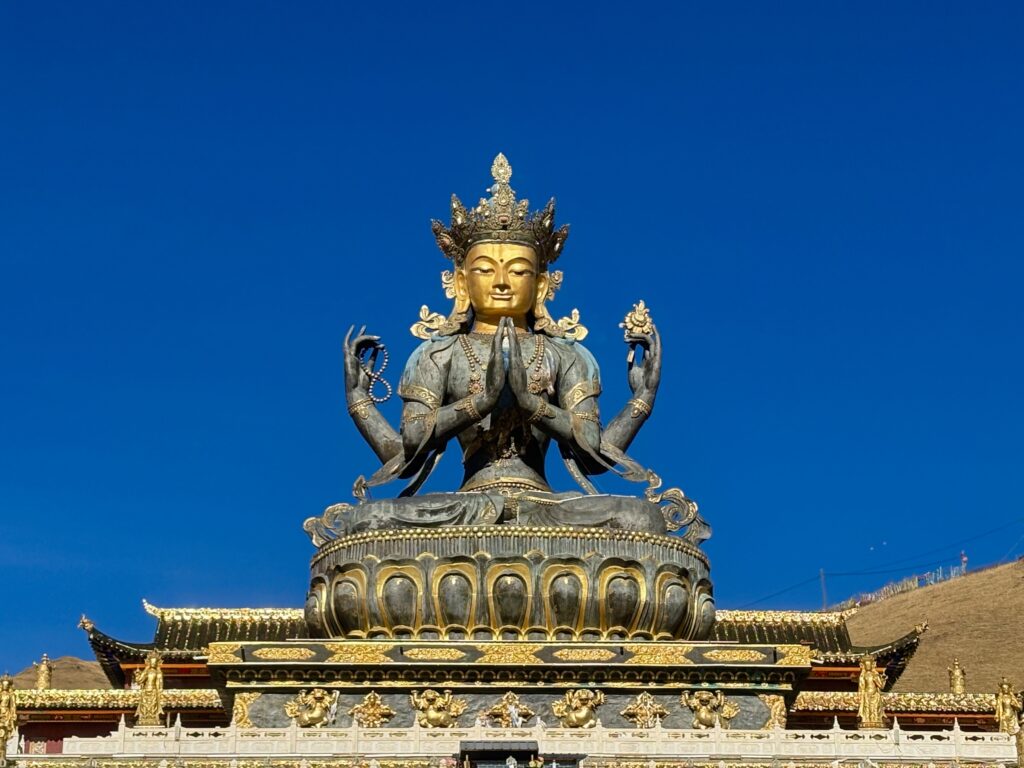
Architectural Layout & Main Shrines
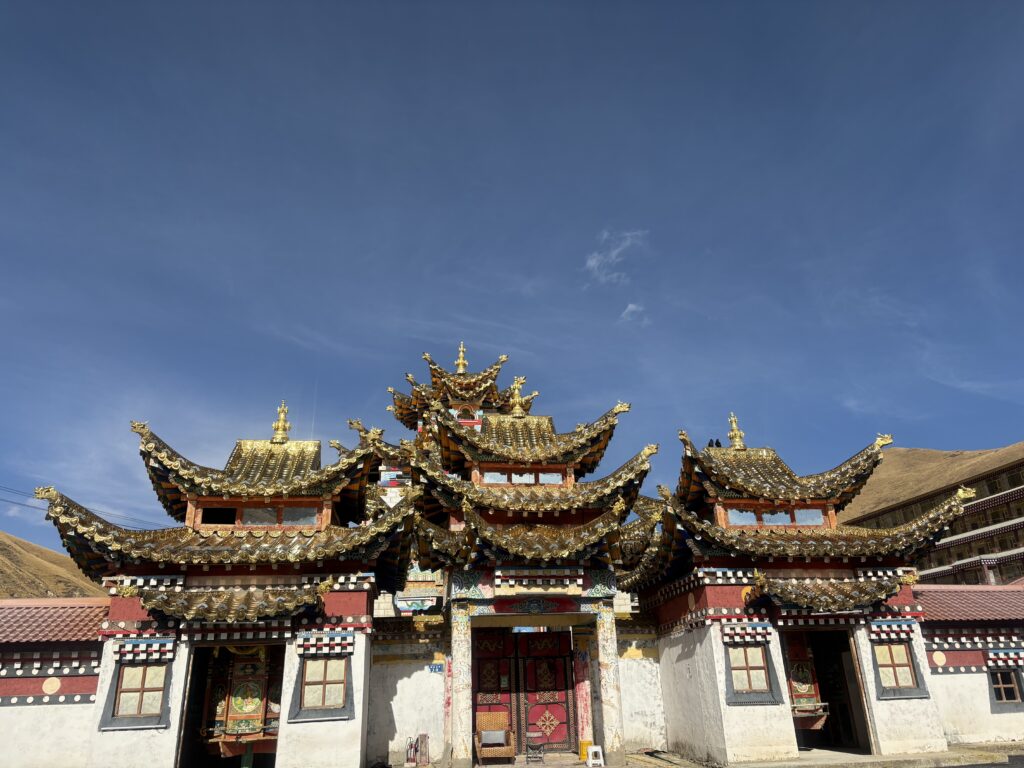
The monastery is built on a gentle hillside, facing the Jigdril River, with a layout inspired by the Potala Palace (Lhasa) — whitewashed walls, red sandstone accents, and golden copper roofs.

Main Assembly Hall (Tsuglakhang)
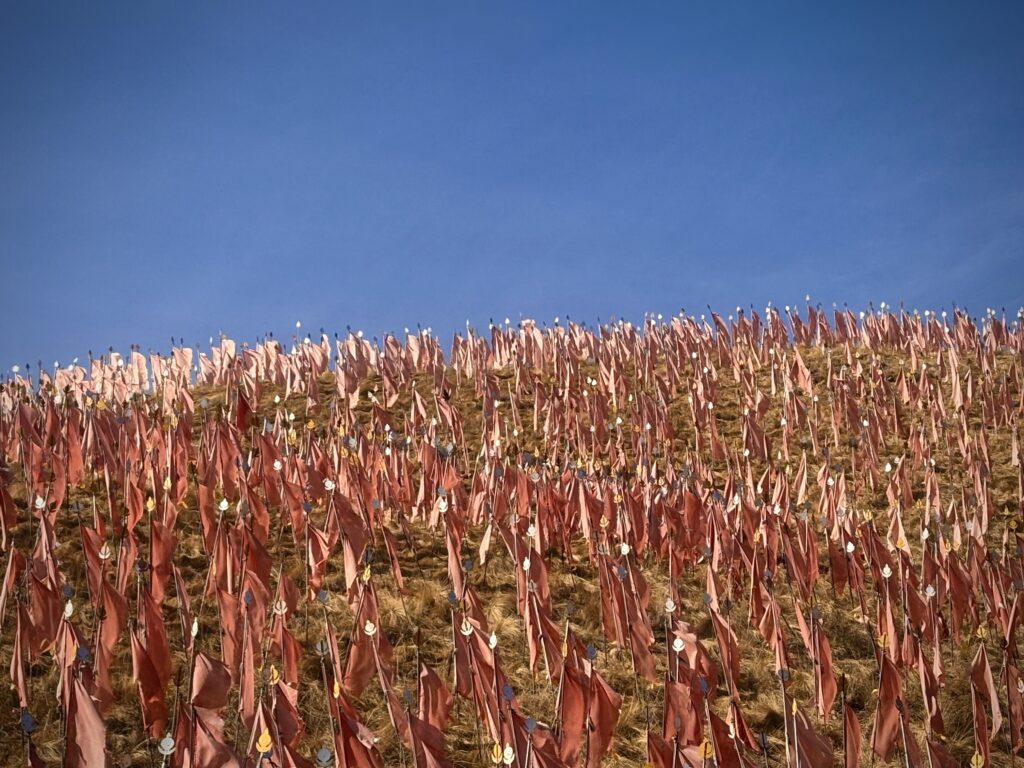
The largest structure, housing a 10-meter-tall statue of Avalokiteshvara (Chenrezig), the Buddha of Compassion, flanked by statues of Manjushri and Vajrapani.
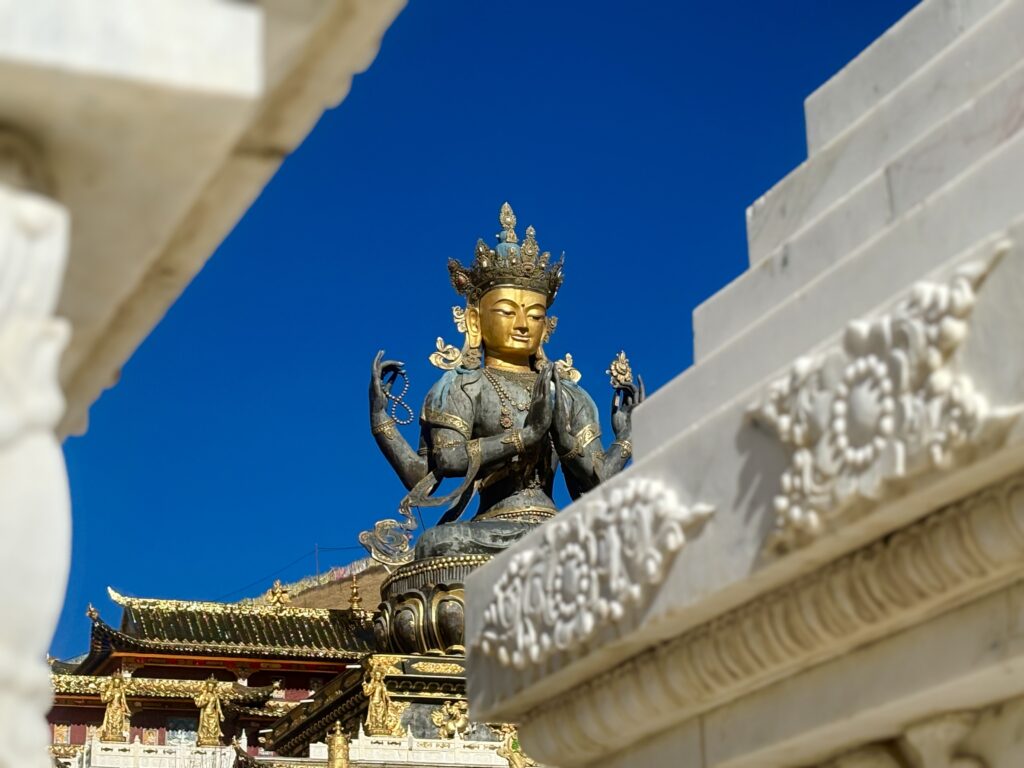
Walls covered with ancient Nyingma-style murals depicting the Eight Great Bodhisattvas, the 1000 Buddhas of the Kalpa, and scenes from the life of Padmasambhava.
The hall’s inner sanctum contains a small reliquary stupa with relics of Dudjom Lingpa.
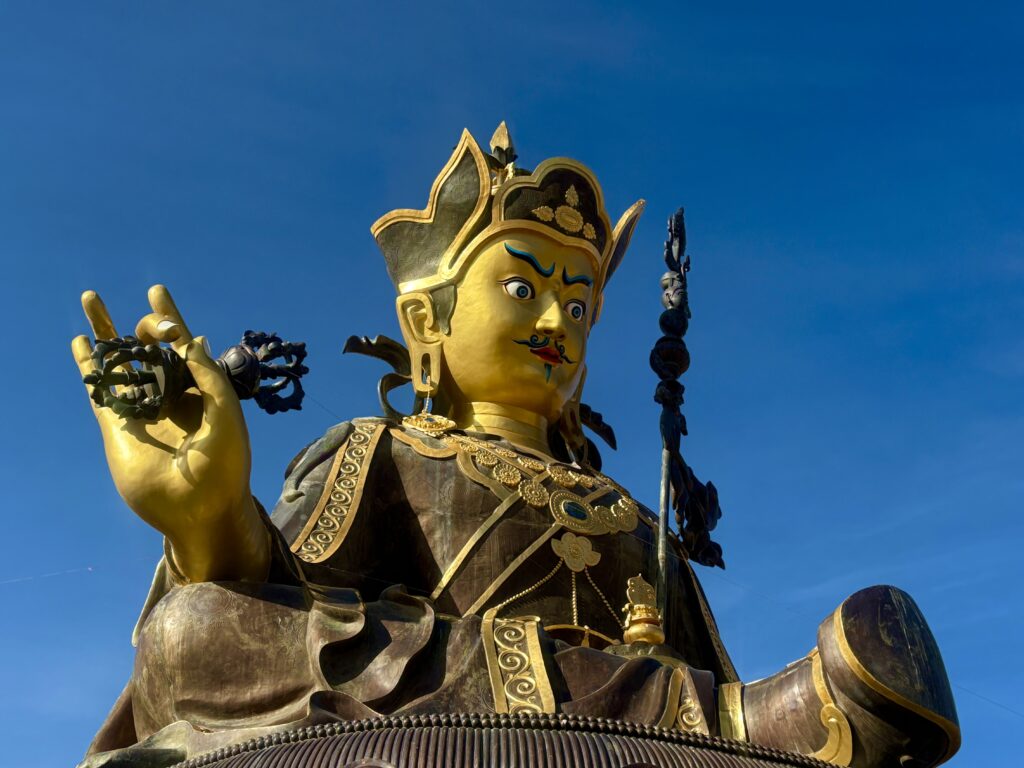
Padmasambhava Chapel (Guru Lhakhang)
Dedicated to Padmasambhava (Guru Rinpoche), the founder of Tibetan Buddhism.
Features a 5-meter statue of Padmasambhava in his wrathful form (Dorje Drolo), surrounded by statues of his 25 main disciples.
Contains a collection of ancient thangkas (18th–19th century) depicting the life of Padmasambhava and the Nyingma lineage masters.
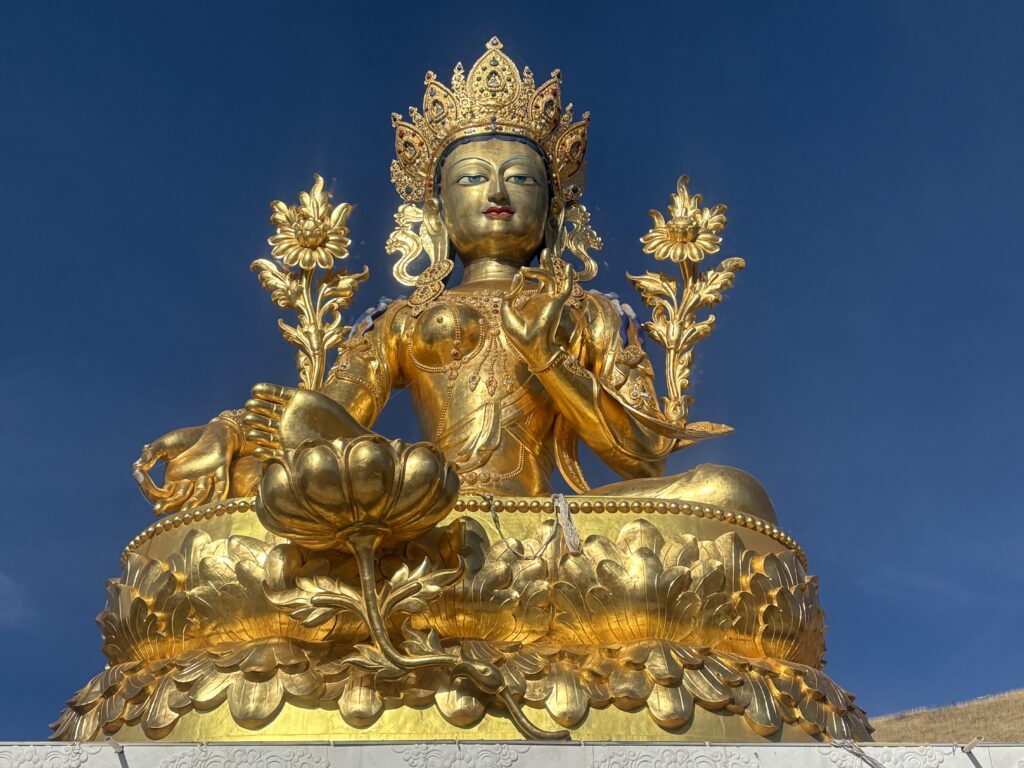
White Tara Stupa (Drolma Karpo Chorten)
A 30-meter-tall stupa located on the hilltop behind the main hall, dedicated to White Tara (Sitatara), the goddess of longevity and healing.
The stupa’s dome is gilded, and its base contains 108 small prayer wheels and niches with statues of White Tara and the 21 Taras.
Offers panoramic views of the monastery, Jigdril Town, and the surrounding grasslands and snow-capped peaks of the Golog Mountains.
Monastic Quarters & Institute
The monastery houses about 50–80 monks (as of 2026), mostly young Tibetan monks from Golog and nearby regions.
A small shedra (Buddhist college) offers traditional Nyingma education: sutras, tantras, philosophy, and ritual practices.
Spiritual Significance & Practices
A key center for Nyingma meditation and tantric practice in the Golog region, especially for the Dudjom Tersar lineage.
Hosts major annual festivals:
Losar (Tibetan New Year): 15 days of prayers, masked dances (cham), and ritual offerings.
Guru Rinpoche Day (10th day of the lunar month): Special ceremonies and fire pujas (homa) dedicated to Padmasambhava.
Summer Retreat (Yarney): A 45-day period of intensive meditation and study for monks.
Pilgrims come to circumambulate the stupa and monastery (kora) and to receive blessings from the resident lamas.
Travel Information
Best Time to Visit: June–September (summer), when the grasslands are green, temperatures are mild (10–25°C), and the mountain views are clear.
Location: 3 km south of Jigdril Town; 450 km southeast of Xining (Qinghai’s capital); 380 km northwest of Chengdu (Sichuan).
Transport:
From Xining: Overnight bus or flight to Jigdril (1.5 hours).
From Chengdu: Bus to Jigdril (8–9 hours) or flight to Golog Maqin Airport (1 hour), then 1-hour drive to Jigdril.
Local: Taxi or motorcycle from Jigdril Town (10 minutes).
Opening Hours: Daily 8:00 AM – 6:00 PM; no entrance fee.
Rules:
No photography inside the halls (murals and statues are sacred).
Dress modestly: No shorts, skirts, or sleeveless tops.
Remove hats and speak quietly in the halls.
Do not touch or climb on statues or stupas.
Nearby Attractions
Nianbaoyuze (Yak Lake): A stunning glacial lake 50 km south of Jigdril, known as the “Jade Lake of the Snowlands.”
Amne Machin (Anyemaqen): A sacred snow-capped mountain (6,282 m) 100 km northeast of Jigdril, one of the four great sacred mountains of Tibet.
Pelyul Monastery (Baiyu): The main Nyingma mother monastery in Sichuan, 200 km southeast of Jigdril.