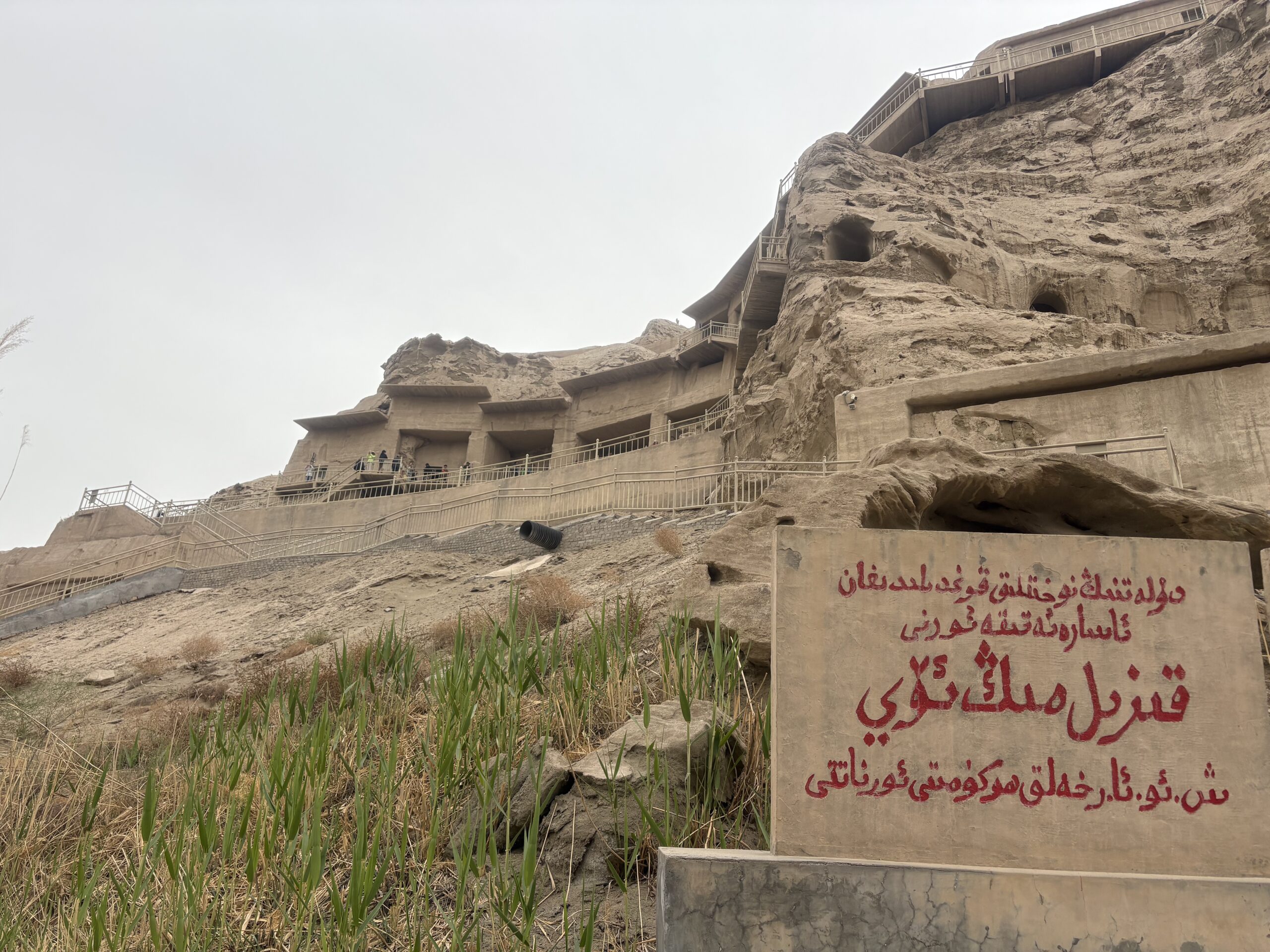
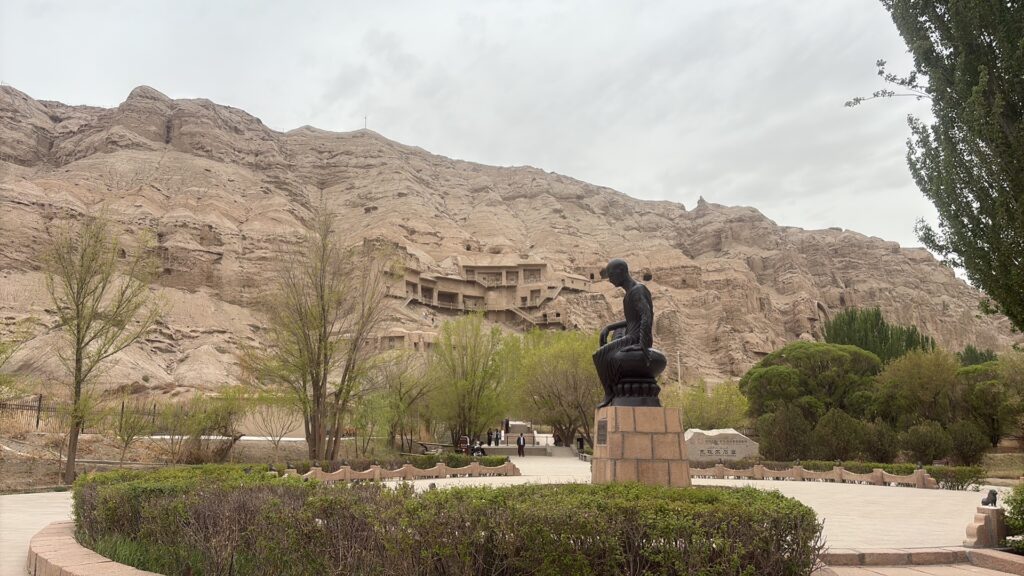
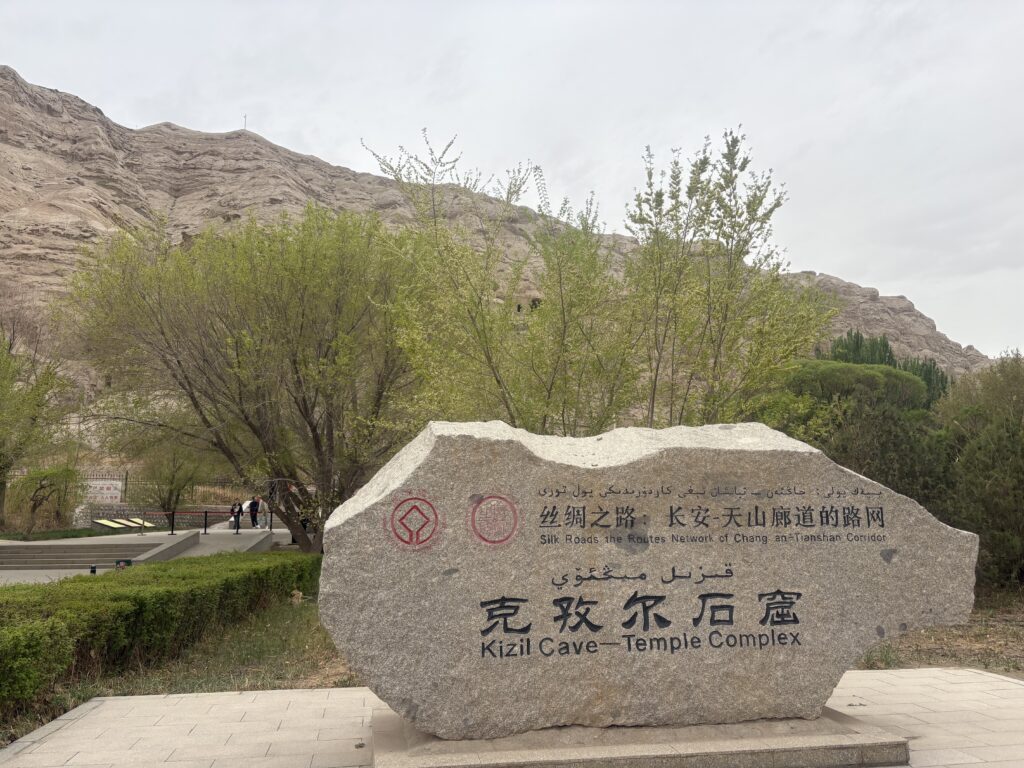
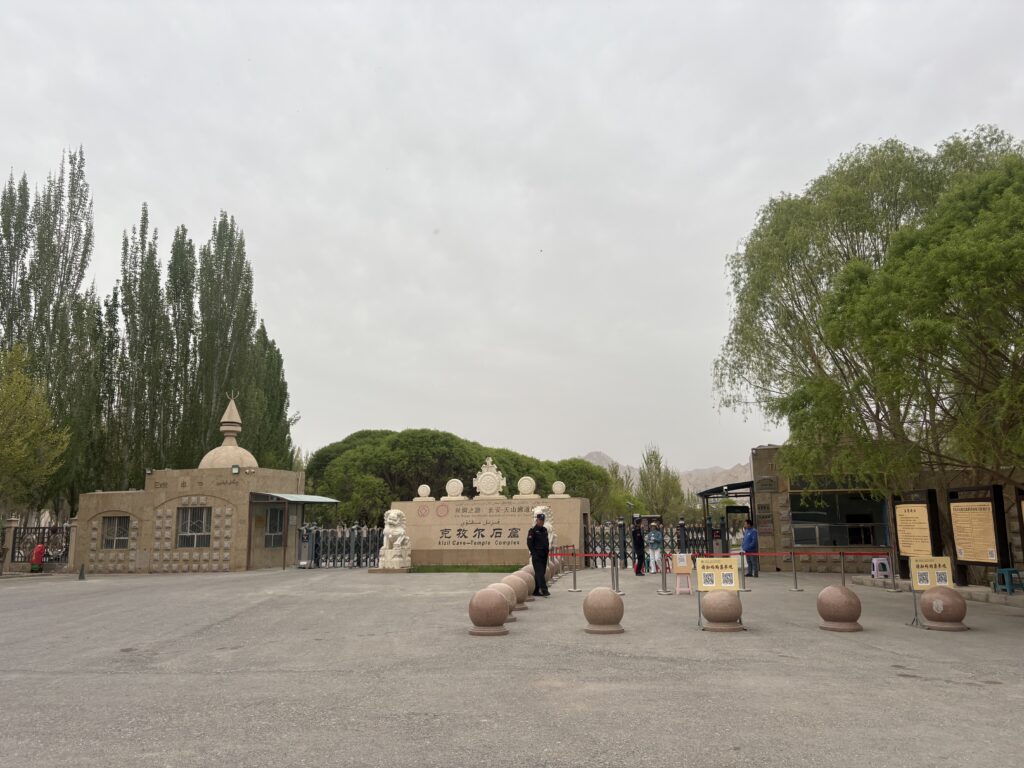
Kizil Caves (Kizil Thousand Buddha Caves) is China’s earliest large-scale Buddhist cave complex and a UNESCO World Heritage Site, located in Xinjiang.
Basic Information
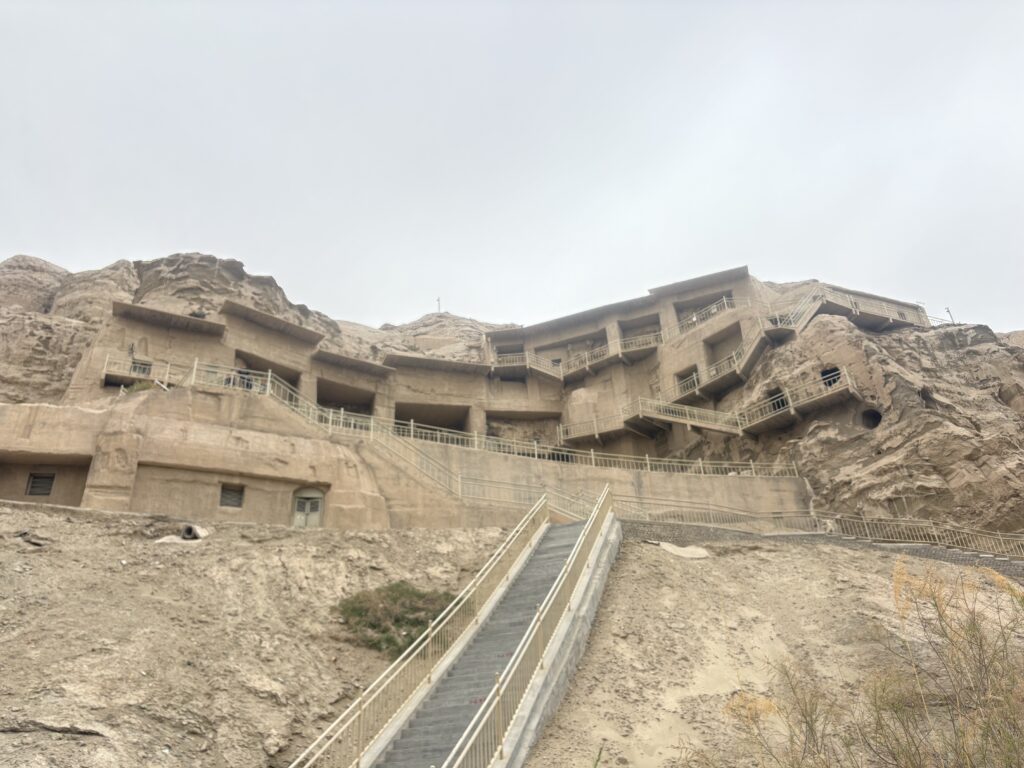
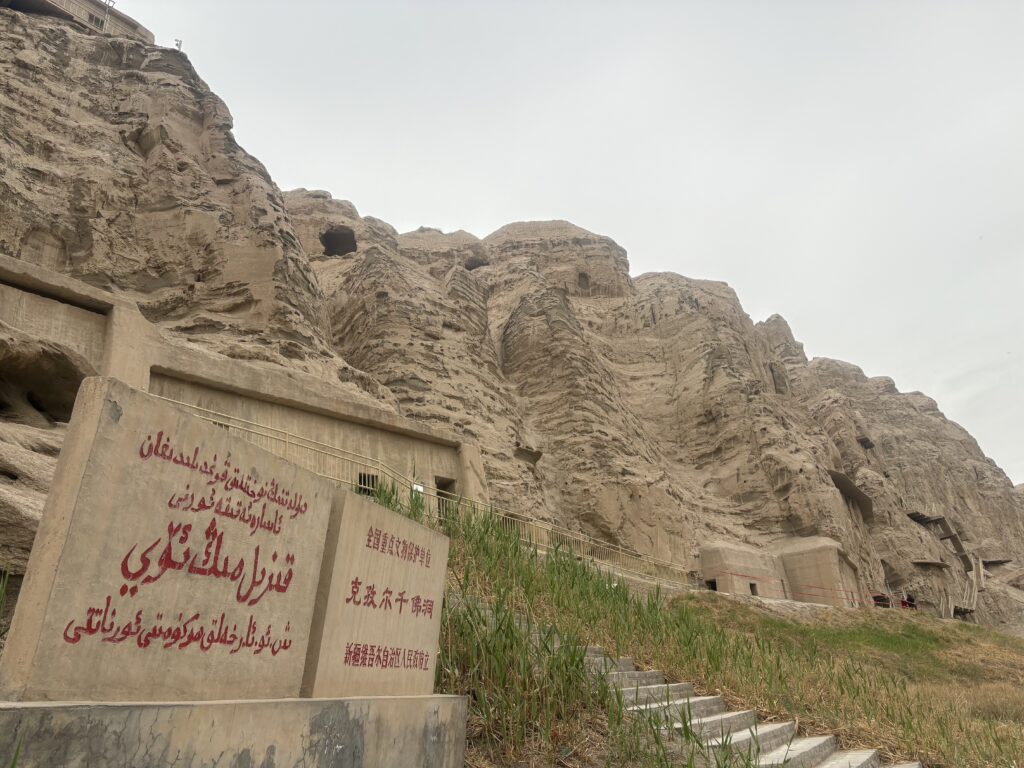
Location: Cliffs of Mingwutag Mountain, 7 km southeast of Kizil Town, Baicheng County, Aksu; 65 km west of Kucha, northern bank of Muzat River.
Age: Carved 3rd–8th centuries (peak 6th–7th c.), ~300 years earlier than Mogao Caves.
Scale: 236 numbered caves (total ~350); ~10,000 m² murals; 80 caves with well-preserved murals.
Honors:
1961: First Batch National Key Cultural Relic Protection Unit.
2014: UNESCO World Heritage (Silk Roads: Chang’an-Tianshan Corridor).
Nickname: China’s Second Dunhuang.
Artistic Features
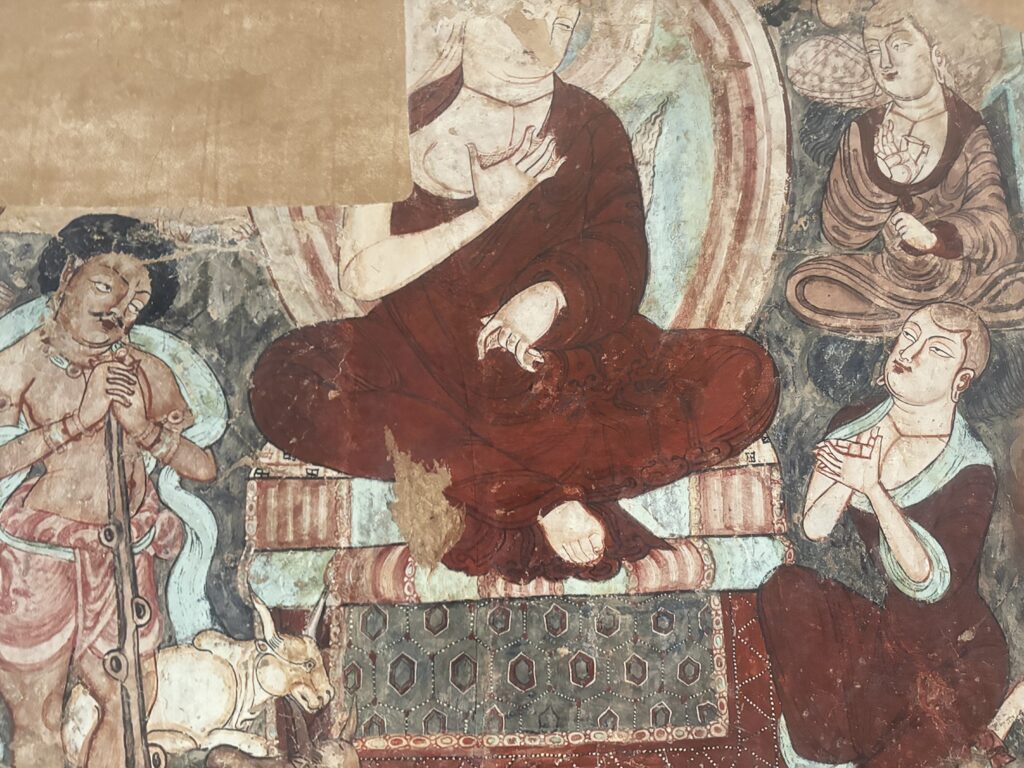
Style: Unique Kucha style (blend of Indian, Persian, Greek & Central Asian elements).
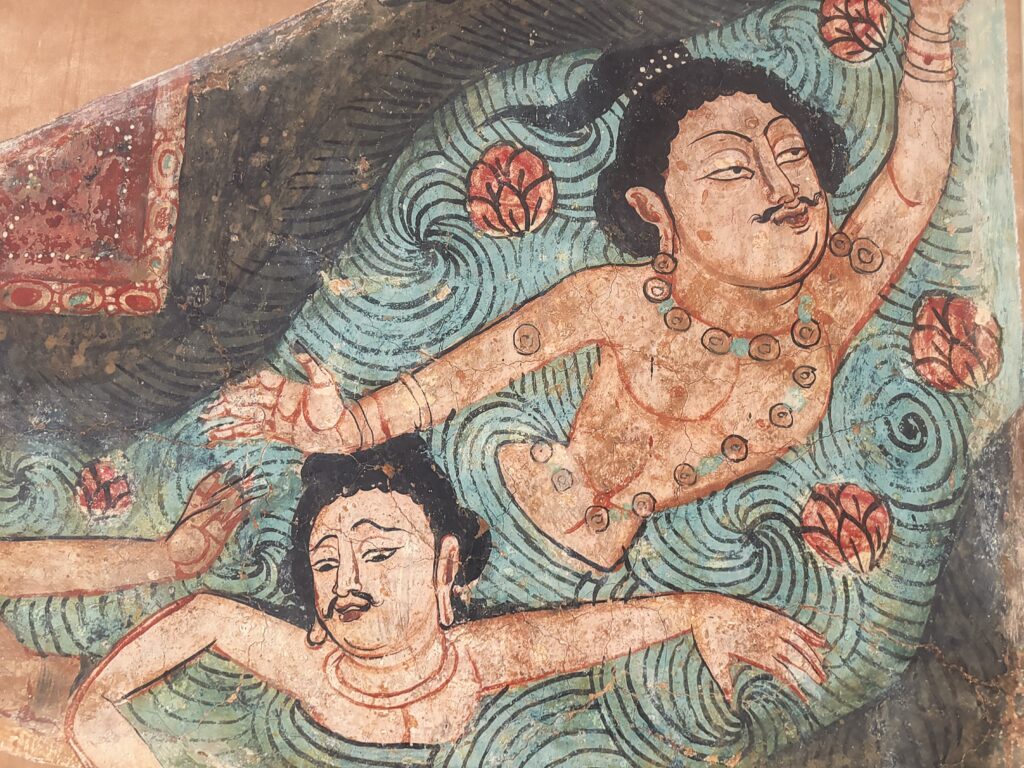
Murals:
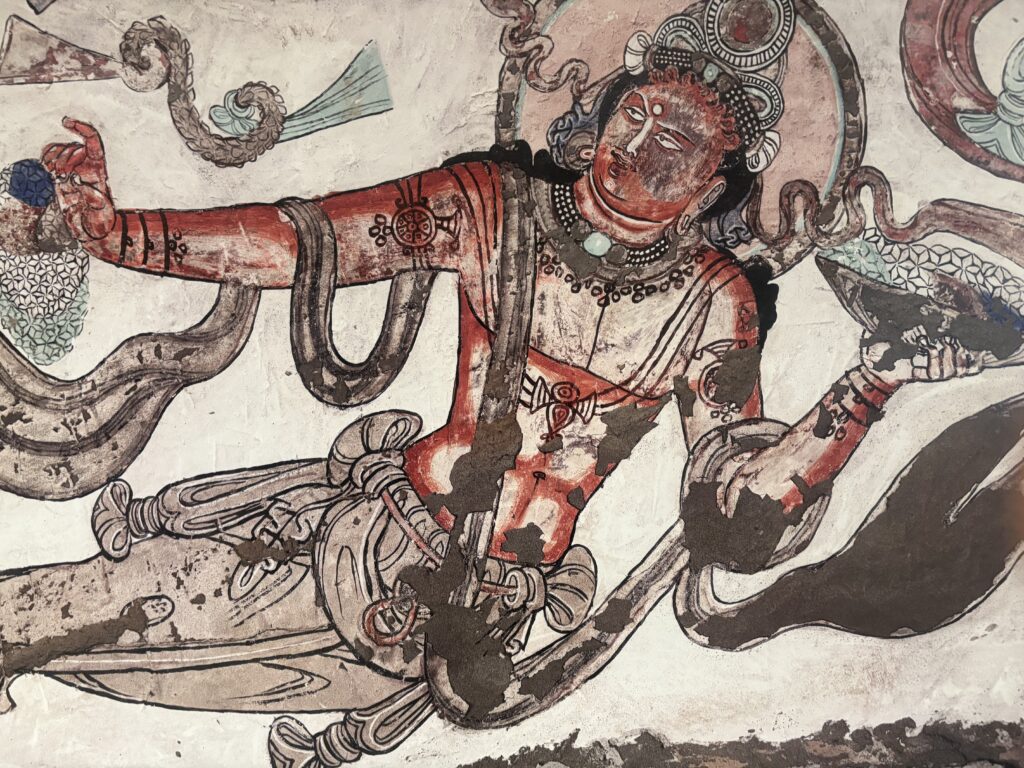
Colors: Dominated by lapis blue, mineral green, ochre red.
Composition: Famous diamond-grid pattern (one story per grid).
Themes: Jataka tales, karma stories, Buddha’s life scenes.
Technique: “bent iron coiled silk” lines + concave-convex shading for 3D figures.
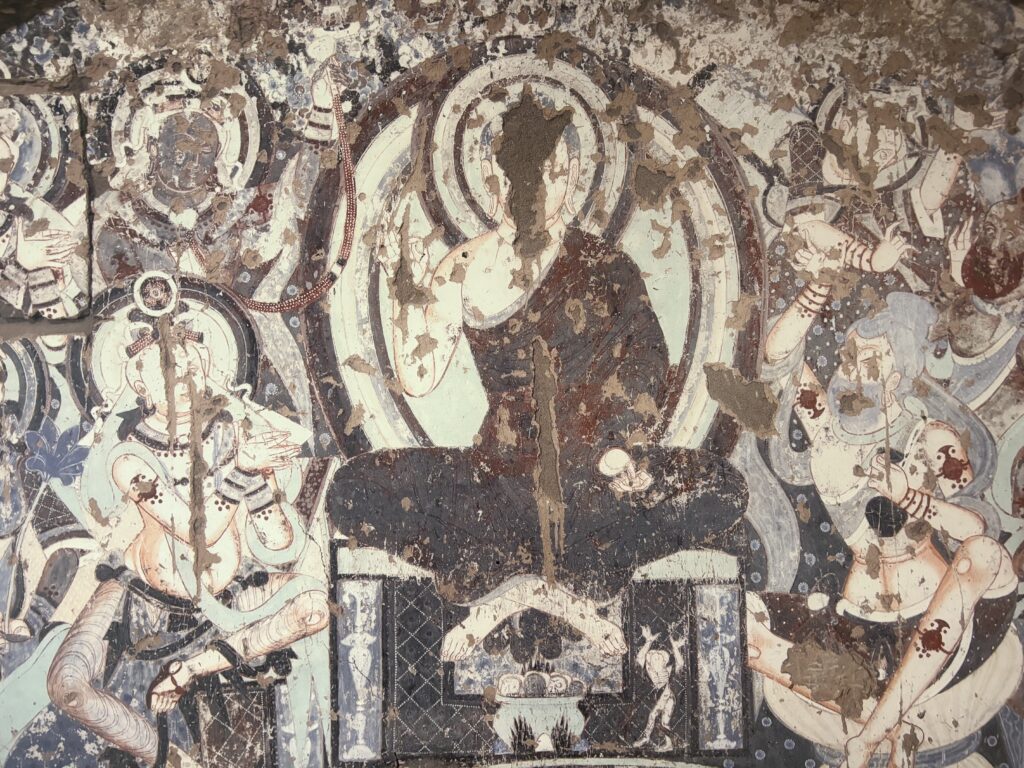
Cave Types:
Central pillar caves (Kucha specialty, for circumambulation).
Giant Buddha caves, square caves, monk cells.
Visiting Tips
Best Time: May–October (cool, less dusty).
Hours: 9:00–19:00 (summer); 10:00–18:00 (winter).
Ticket: ~CNY 70 (includes guided tour of open caves).
Note: Only 10–15 caves are open to public (preservation); no photos inside caves.