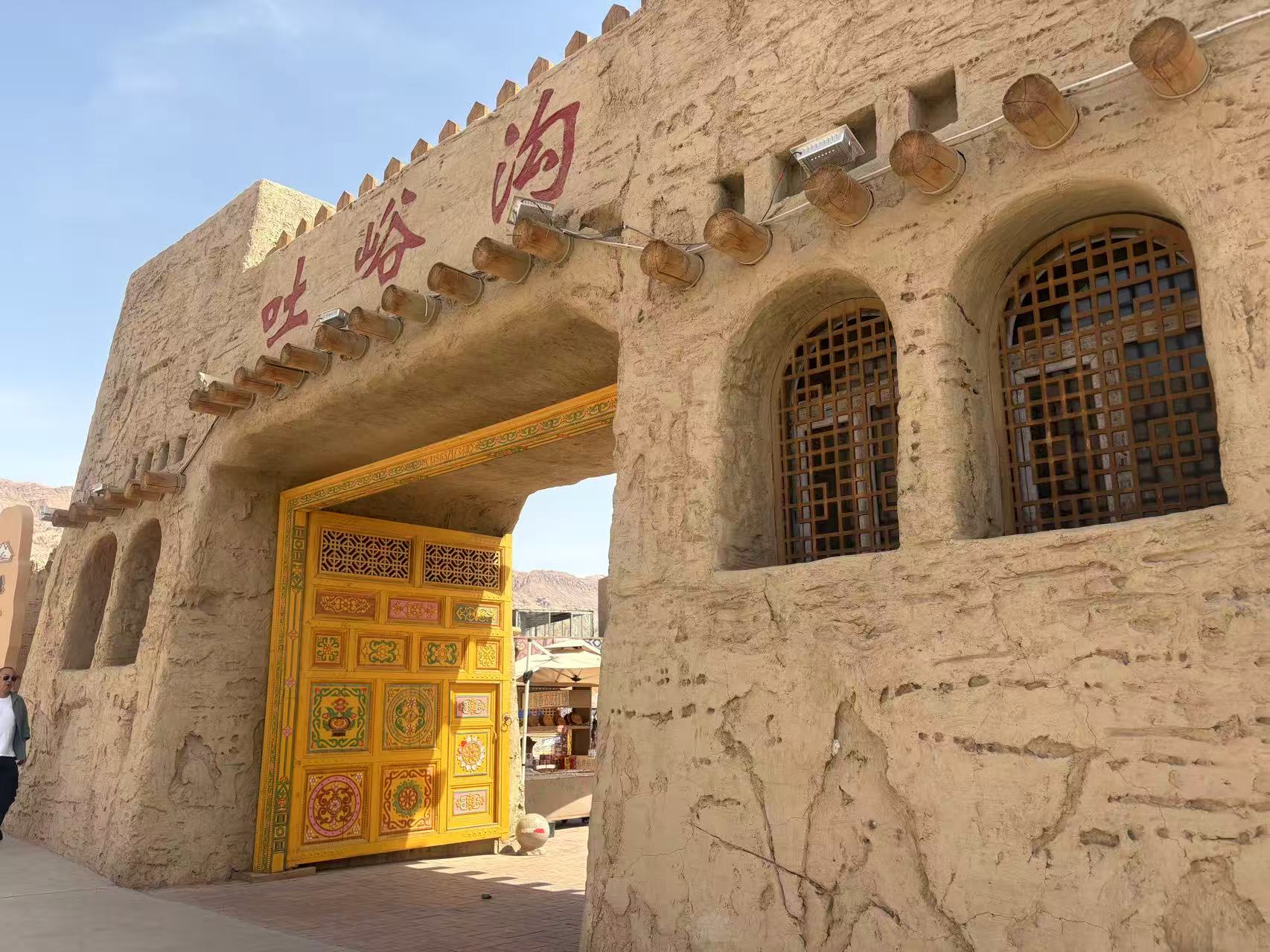
Tuyoq (Uyghur: تۇيۇق; Chinese: 吐峪沟; pinyin: Tǔyùgōu) is an ancient valley and oasis village in Shanshan County, Turpan, Xinjiang. It’s a key Silk Road site where Buddhist and Islamic cultures intersect.
Basic Info
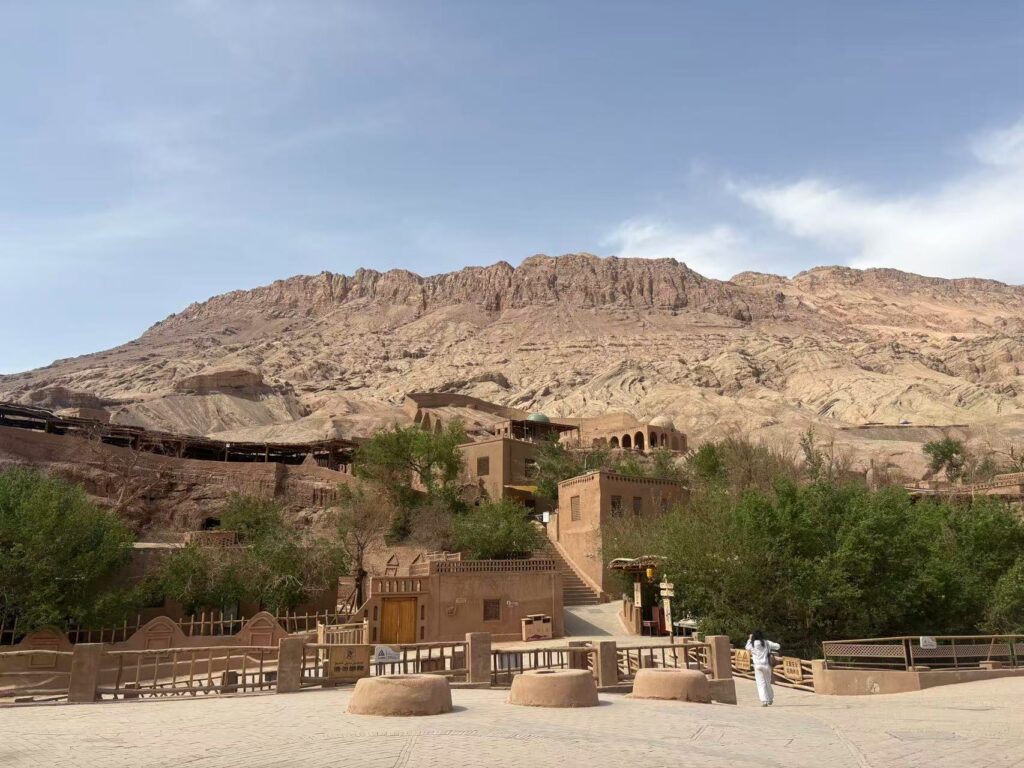
Location: ~70 km east of Turpan, cutting through the Flaming Mountains.
Age: Over 1,700 years; one of Xinjiang’s oldest surviving Uyghur settlements.
Nickname: “Cradle of Silk Road Civilizations”.
Tickets: ~¥30.
Best time: May–October (hot summers, cool autumns).
Core Attractions
Tuyoq Village (Mazar Village)
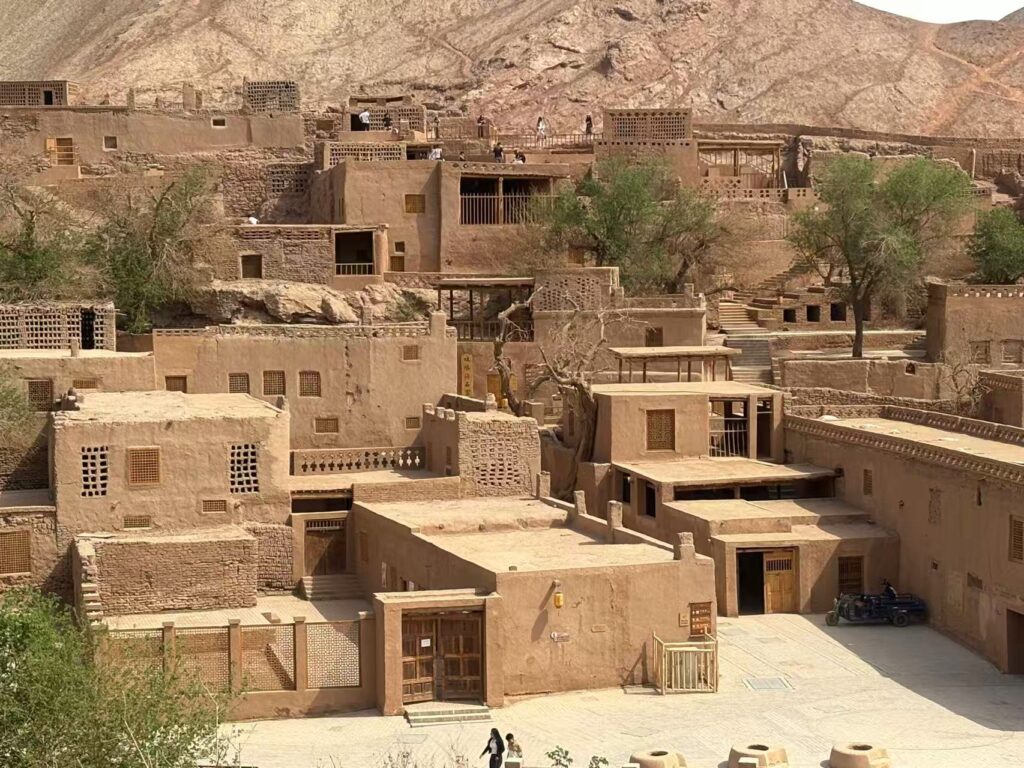
Ancient earthen buildings (“Museum of Loess Architecture”).
Narrow lanes, adobe homes, and a 1,700-year-old Uyghur community.
Tuyoq Thousand Buddha Grottoes
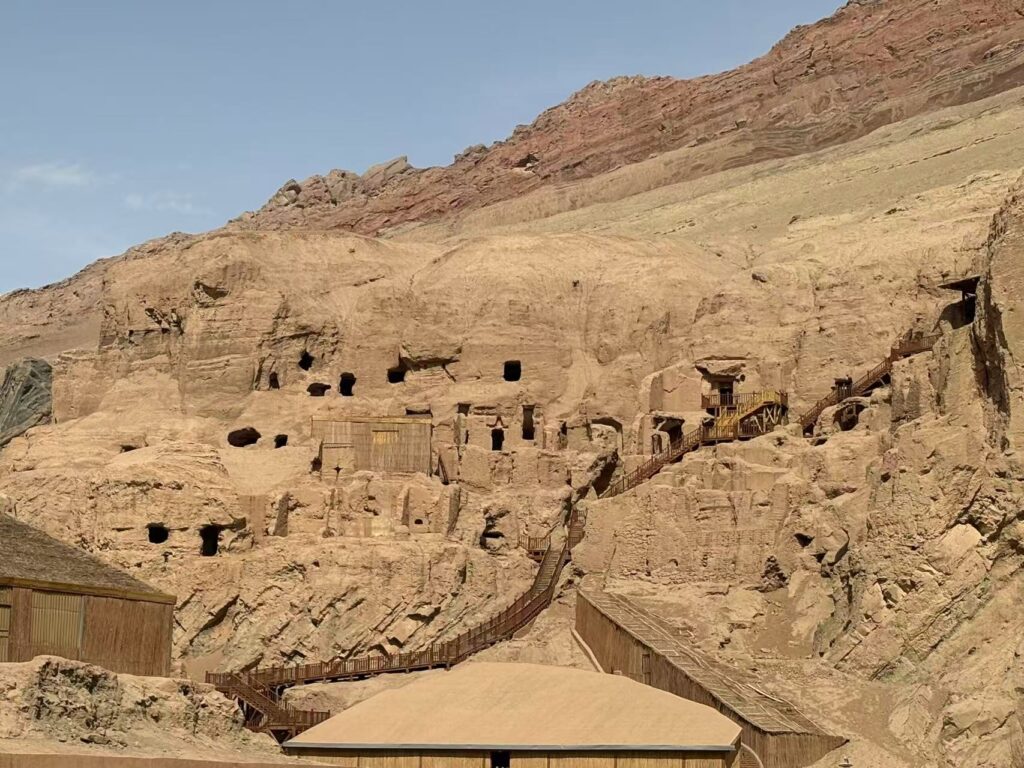
One of Xinjiang’s three major Buddhist cave groups.
94 caves; 8 with surviving murals (5th–14th centuries).
Fusion of Kucha, Mogao, and Uyghur styles.
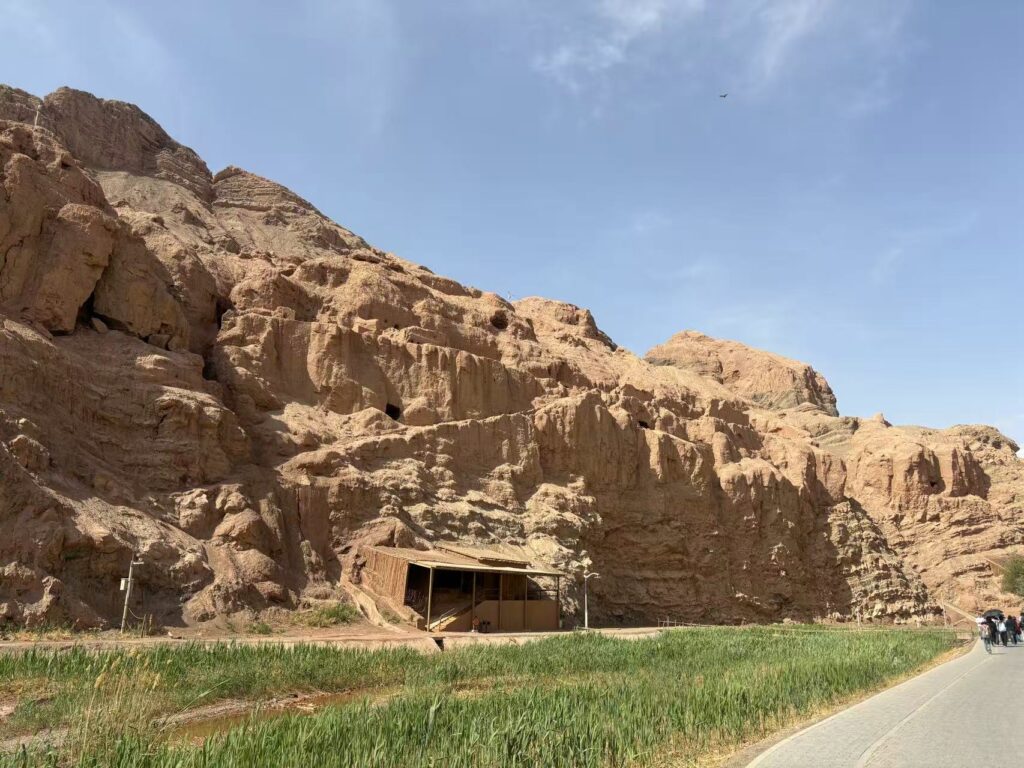
Tuyoq Grand Canyon
8 km long, slicing the Flaming Mountains.
Red rock cliffs, desert scenery, and hiking trails.
Hoja Mazar (Islamic Shrine)
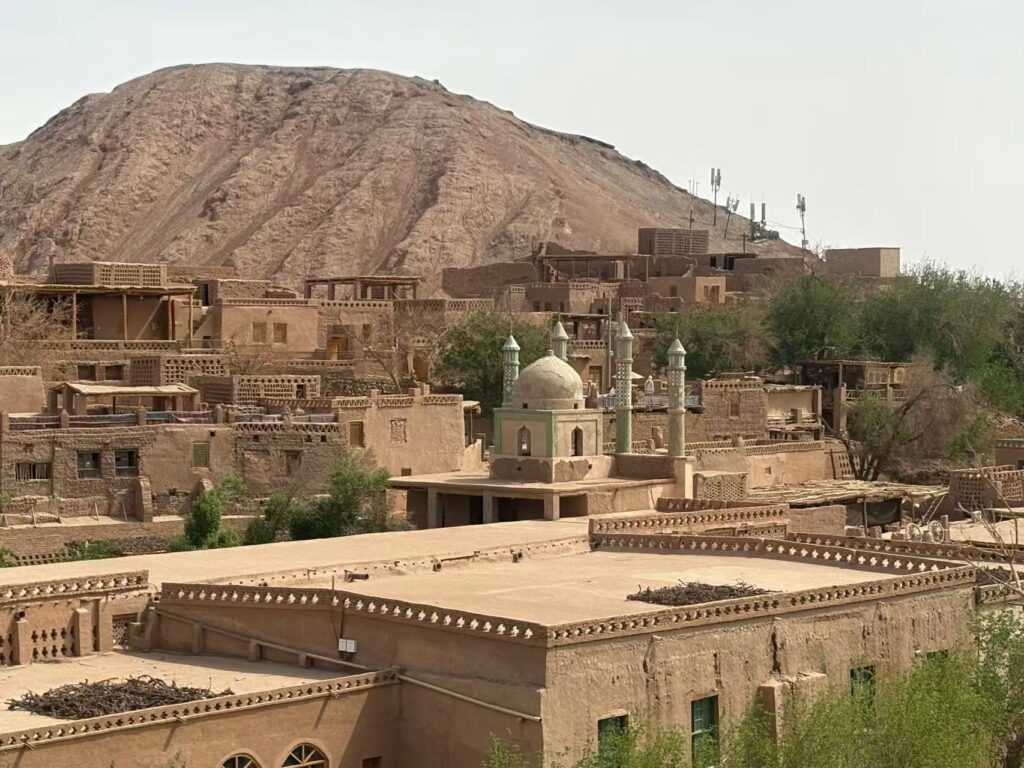
1,300-year-old “Saints’ Tomb”; a major Muslim pilgrimage site.
Linked to early Islamic missionaries in China.
Why Visit?
Silk Road Crossroads: Mix of Buddhist, Islamic, Central Asian, and Han Chinese influences.
Living History: Ancient village life unchanged for centuries.
Unique Scenery: Red deserts, green oases, and dramatic canyons.
How to Get There
By car: 1.5–2 hours from Turpan.
By tour bus: Daily services from Turpan’s main stations.