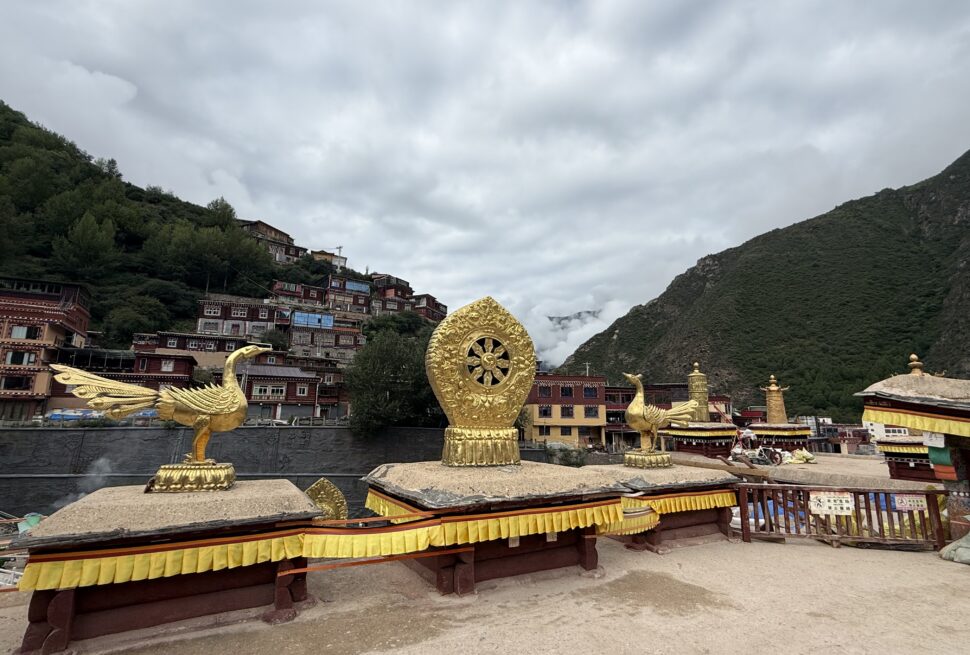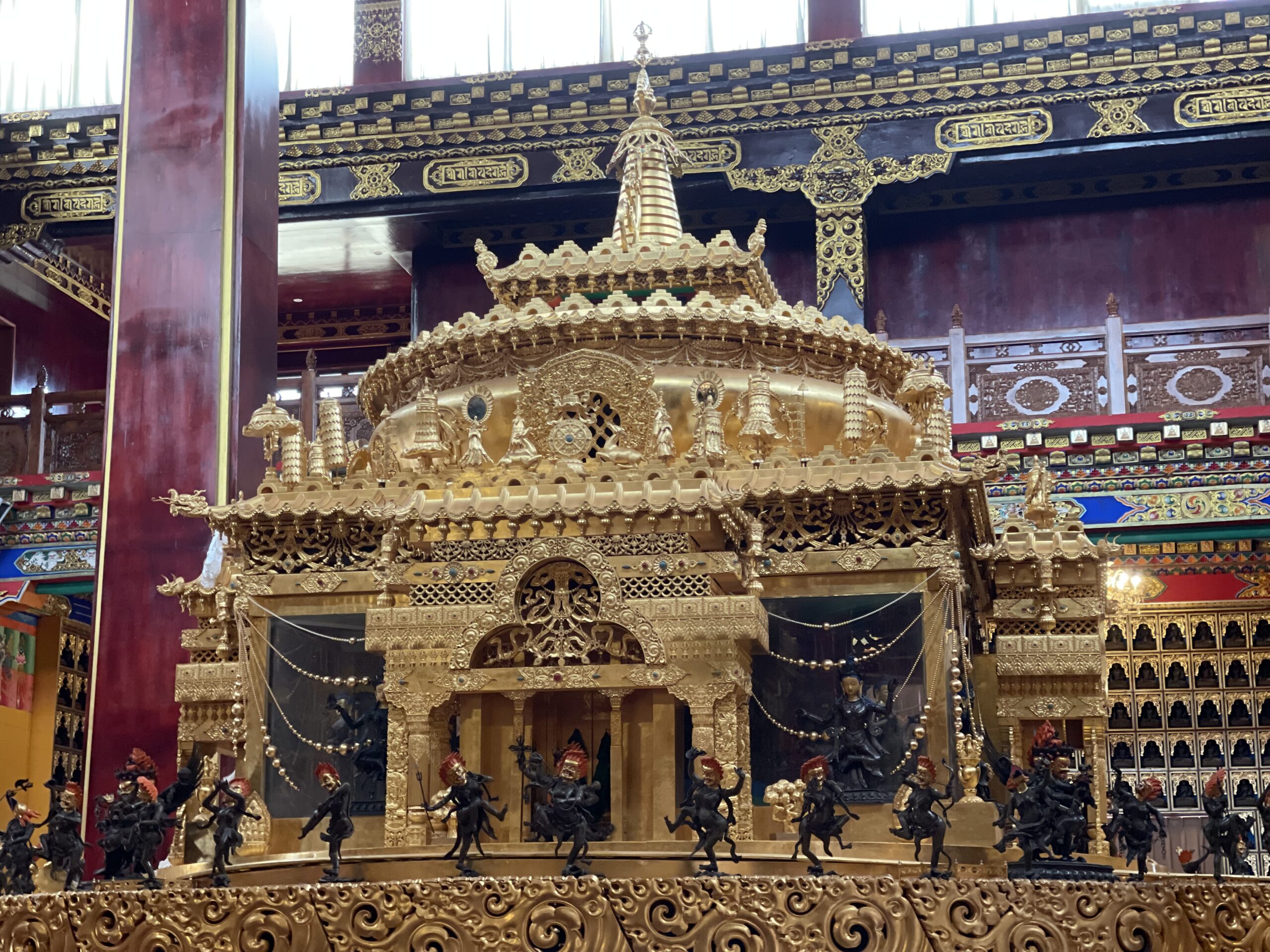
The Purba Cham (ཕུར་པའི་འཆམ་) is a specific, wrathful ritual dance centered on the deity Vajrakilaya (Tibetan: Dorje Phurba), the “Adamantine Dagger.” This is a major Vajrakilaya (Dorje Phurba) empowerment and practice assembly established at Dzogchen Monastery in the late 19th century by the Fifth Dzogchen Rinpoche, Thubten Chökyi Dorje.
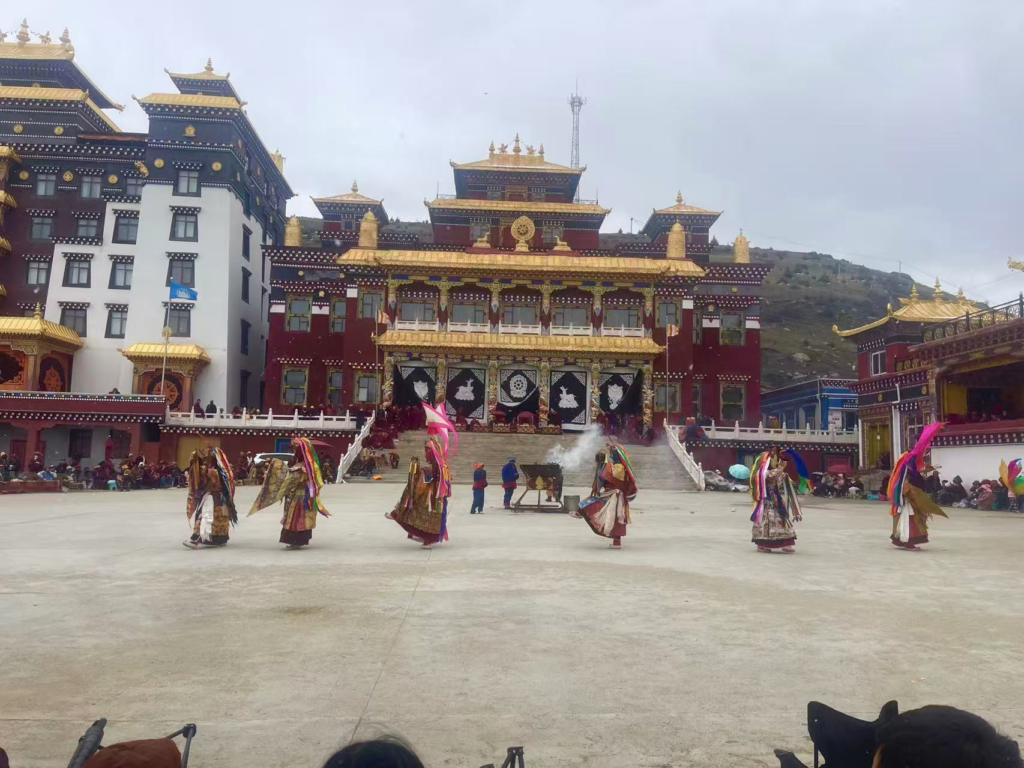
It follows the ritual tradition of the Vajrakilaya practice texts, with liturgies arranged by Rigdzin Jigme Lingpa, and involves a grand seven-day ritual gathering.
1. The Deity: Vajrakilaya (Dorje Phurba)
- The “Dagger of Enlightenment”: Embodies the fierce, uncompromising compassion that cuts through spiritual stagnation and psychic blockages.
- A Principal Practice of Dzogchen: Despite its wrathful appearance, Vajrakilaya practice is considered a direct path to realizing the Dzogchen (Great Perfection) view by rapidly purifying obscurations.
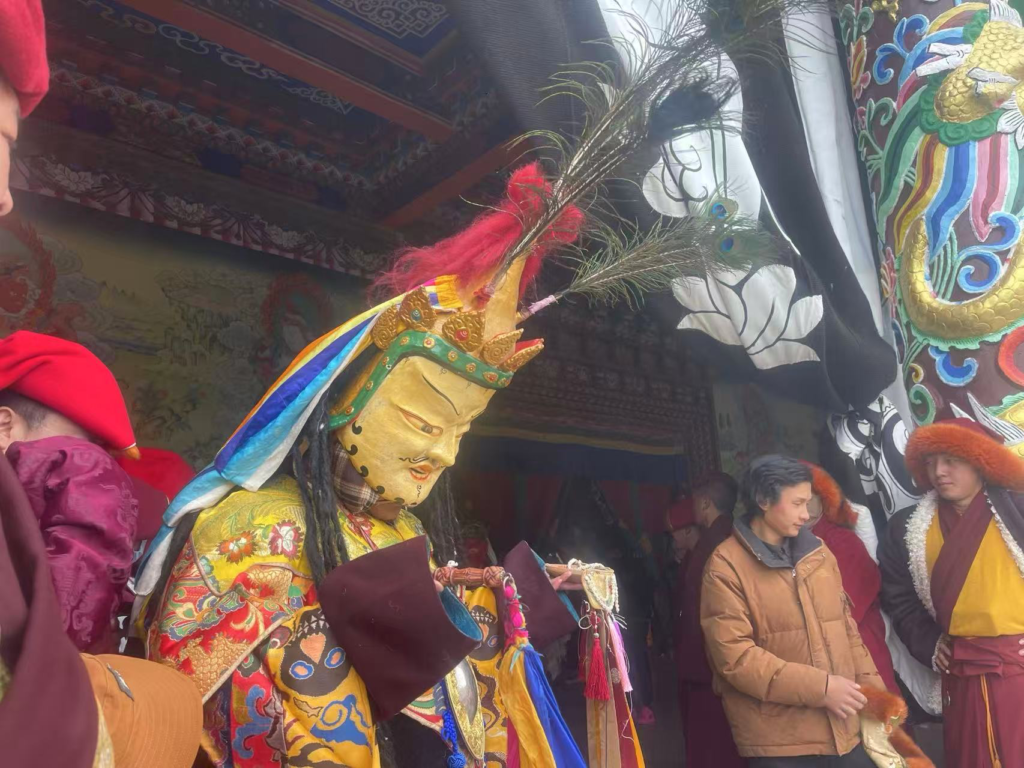
2. The Ritual implements & Movements
- The Purba Dagger: The dancers hold a three-sided ritual dagger. The three sides represent the destruction of the three poisons. Its movement in the dance “stakes” and neutralizes negativity.
- Stomping & Pivoting: The forceful, grounded stomping (gaktok) symbolizes subduing ego and evil forces into the earth.
- Mudras & Postures: Each hand gesture and stance is a sacred seal invoking the deity’s power and mandala.
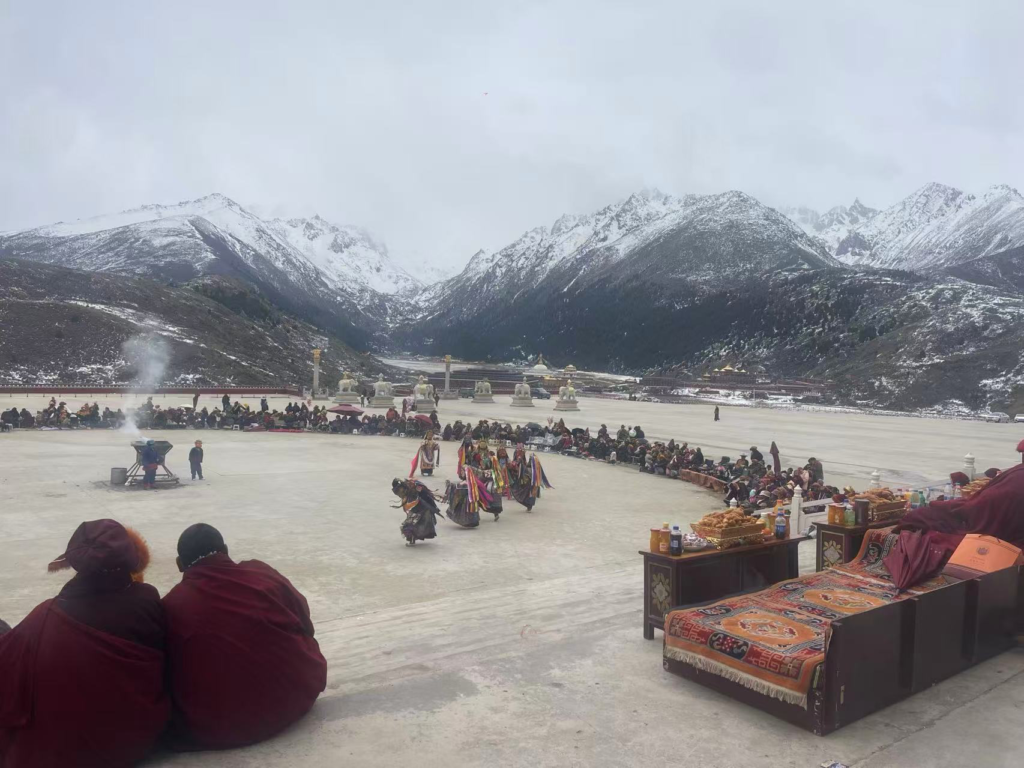
3. The Narrative
The dance often enacts the myth of Vajrakilaya’s emergence to subdue the Rahu-like forces (personifications of obstruction) and establish a purified realm. It is a cosmic drama of purification.
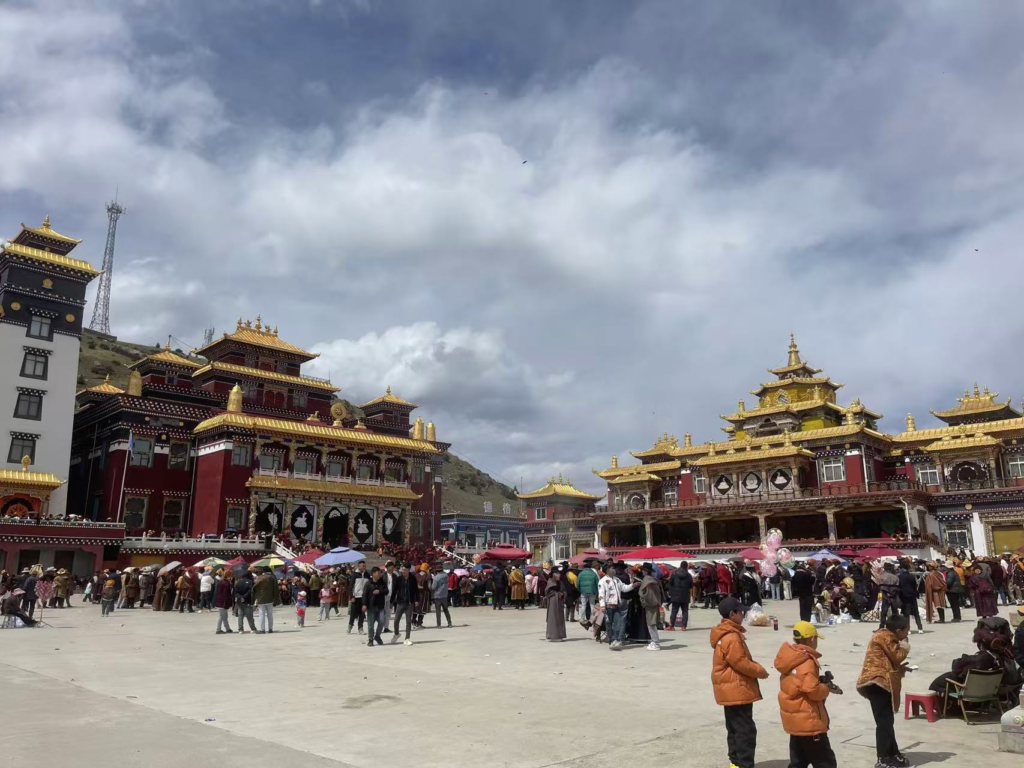
The Visual & Sensory Experience
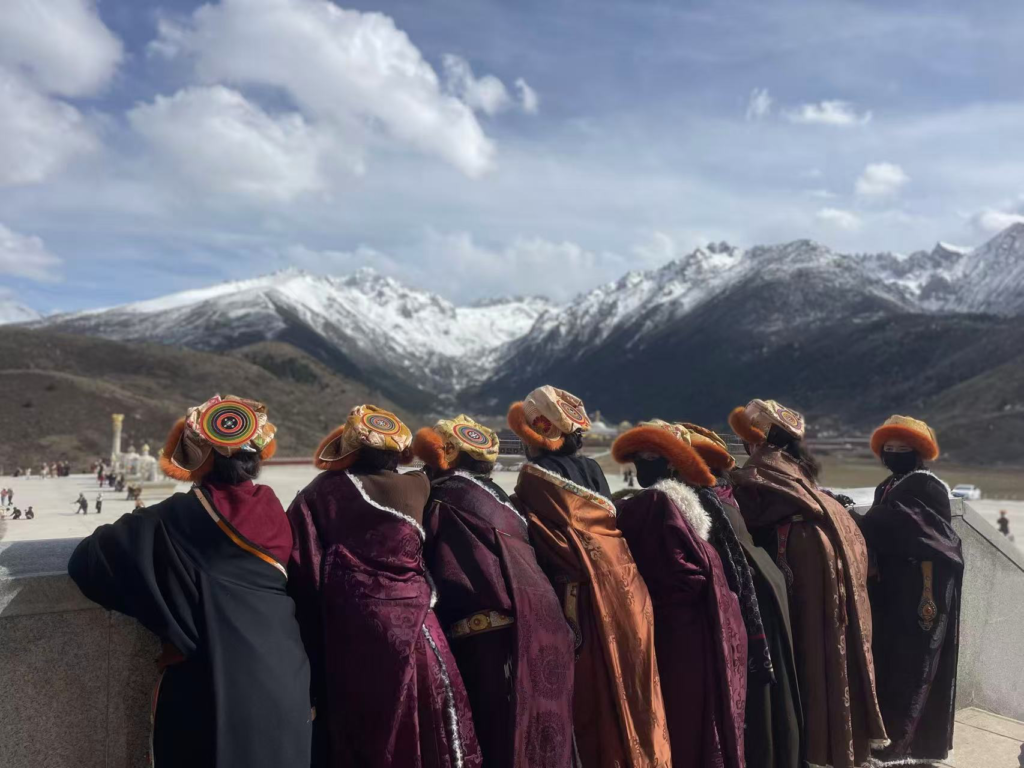
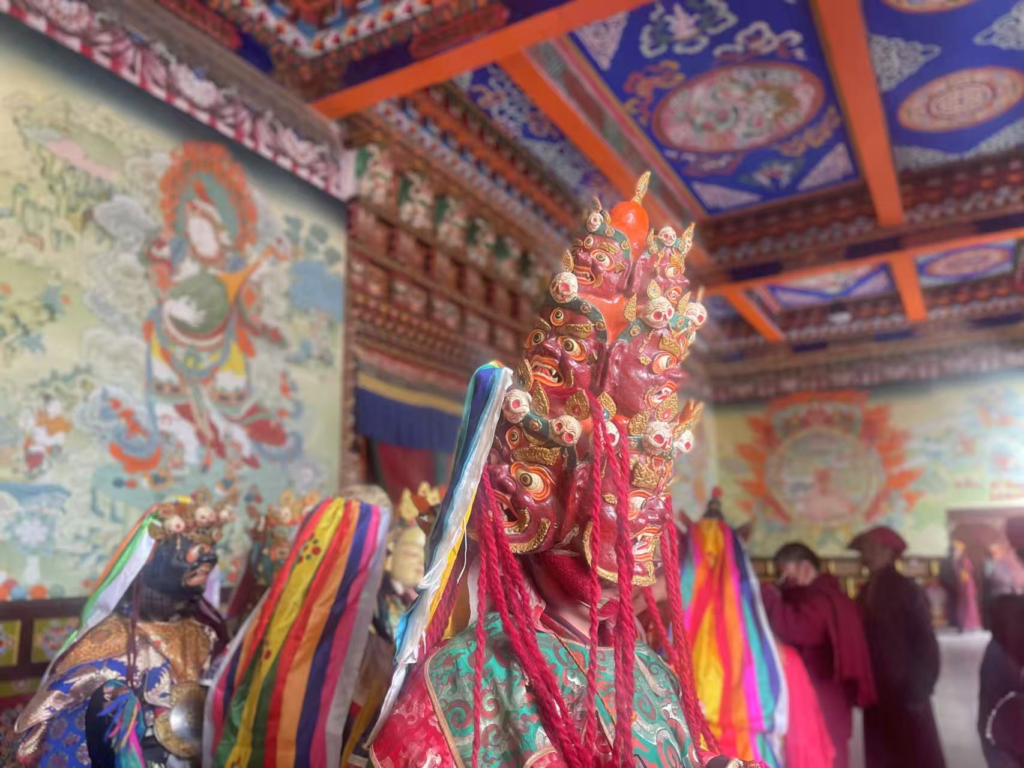
- Masks: Fierce, three-eyed masks, often in a dark blue or wrathful red hue, representing the deity’s awakened, compassionate wrath.
- Costumes: Elaborate brocade robes with symbolic patterns, bone ornaments, and flowing sashes that amplify the dynamic movements.
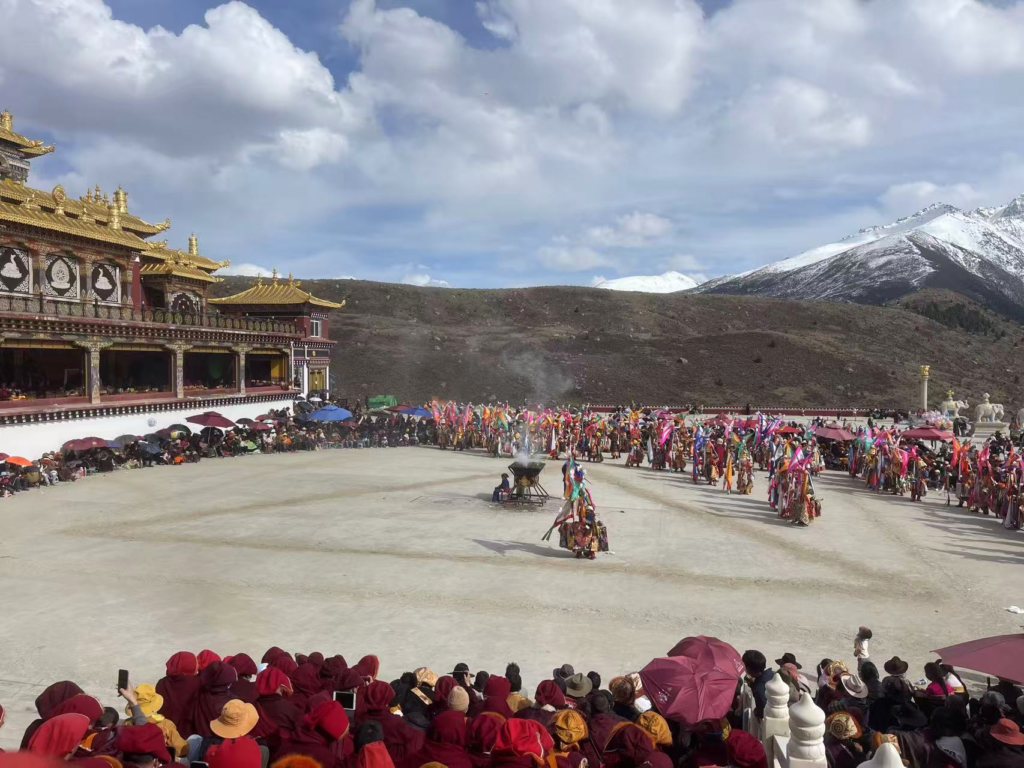
- Music: The orchestra intensifies for this dance. The deep, vibrating blasts of the long horns (dungchen) evoke the terrifying yet liberating voice of the deity. Rhythms are sharp and punctuated.
- Atmosphere: The air becomes charged with focused spiritual energy. For devotees, it is a profound blessing; for observers, it is a visceral, awe-inspiring spectacle.
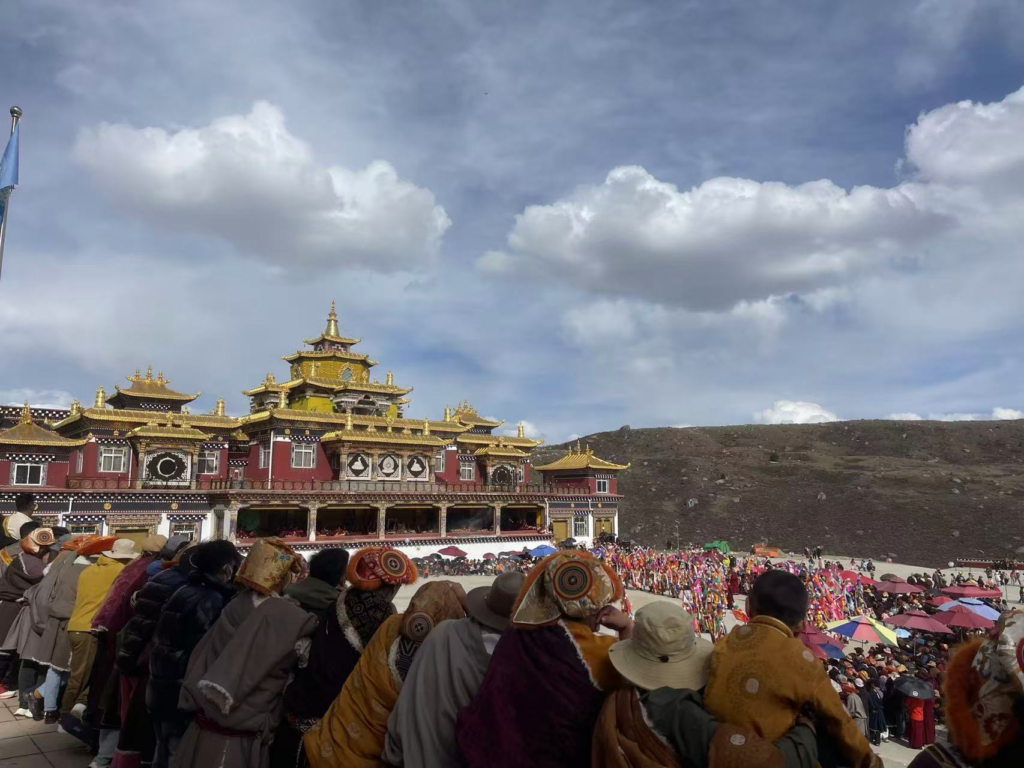
· On the first subsequent day, there is a sacred dance (cham) accompanied by the peaceful abiding of the assembly of Vajrakilaya deities.
· On the second day, dances related to the Dharma protectors, especially the chief protector Dorje Drekden (Vajraklaya), are performed.
· On the third day, the obstructive forces and enemies are subjugated through the practice of “destroying the army of obstacles” with ritual offerings (gtor rgvag).
· On the fourth day, a particularly grand and elaborate Vajra dance is performed, featuring the heroic figures of Gesar, his general Puna, and their wind‑horse companions, adorned with extensive ceremonial display.
Today, this great sādhana, together with its rituals and sacred dances, has been revived in accordance with the ancient tradition.
In the past, in the Kham region, “Dzogchen Purchen” was also a famous major festival, attracting large numbers of people from farming and nomadic communities for pilgrimage and forming a large trade gathering.