Silk Road Trip
This expedition spans from the Tibetan Plateau, through the desert fortresses of the Hexi Corridor, across the brutal Taklamakan Desert (via its northern or southern rim), and into the Pamir Mountains’ foothills.
Highlights
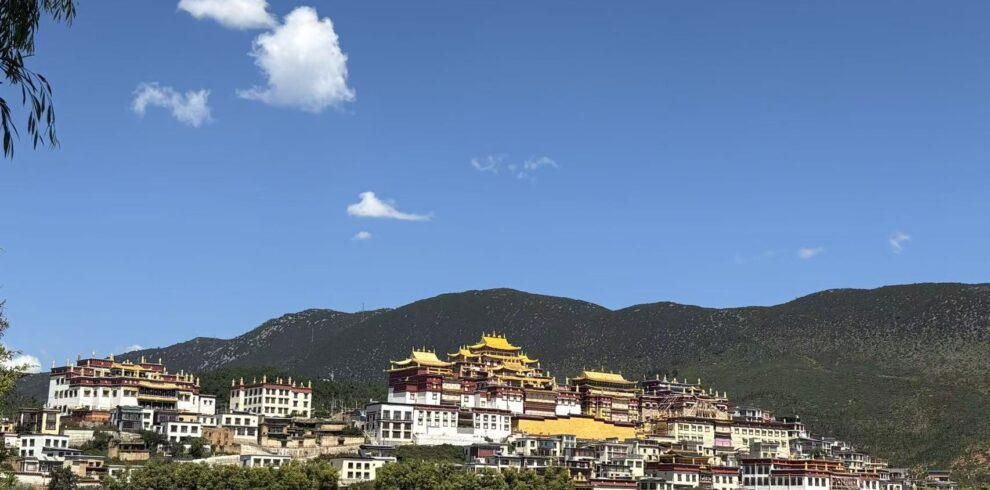
- Xining: Kumbum Monastery (Tibetan Buddhist art).
- Zhangye Danxia: The breathtaking rainbow-colored mountains.
- Jiayuguan Pass: The imposing "First and Greatest Pass" of the Great Wall.
- Dunhuang: The grand finale of the Hexi Corridor with the Mogao Caves (apex of Buddhist grotto art) and the Singing Sand Dunes.
- Turpan: A deep desert depression and ancient oasis.
- Jiaohe Ruins: Astounding mud-brick ruins of an ancient city built on a towering loess plateau.
- Karez Water System: A marvel of ancient underground irrigation, a UNESCO site.
- Flaming Mountains: Striking red sandstone hills blazing under the sun.
- Ürümqi: Modern capital, gateway to the Tian Shan mountains.
- Kuqa: A historic oasis kingdom center.
- Kizil Caves: The oldest Buddhist cave complex in China, showing strong Gandharan (Greco-Indian) influence, predating Mogao.
- Hotan: Famous for its jade (from the nearby rivers) and traditional silk production.
- Kashgar is not about ancient ruins; it's about living history. The sense of arrival here is palpable.
- Sunday Market (Bazaar): The soul of Kashgar and a top Silk Road highlight.
- Stop at Lake Karakul, with its crystal waters reflecting Muztagh Ata ("Father of Ice Mountains")—a view that has stopped caravans for millennia.
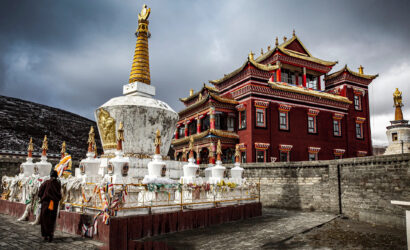
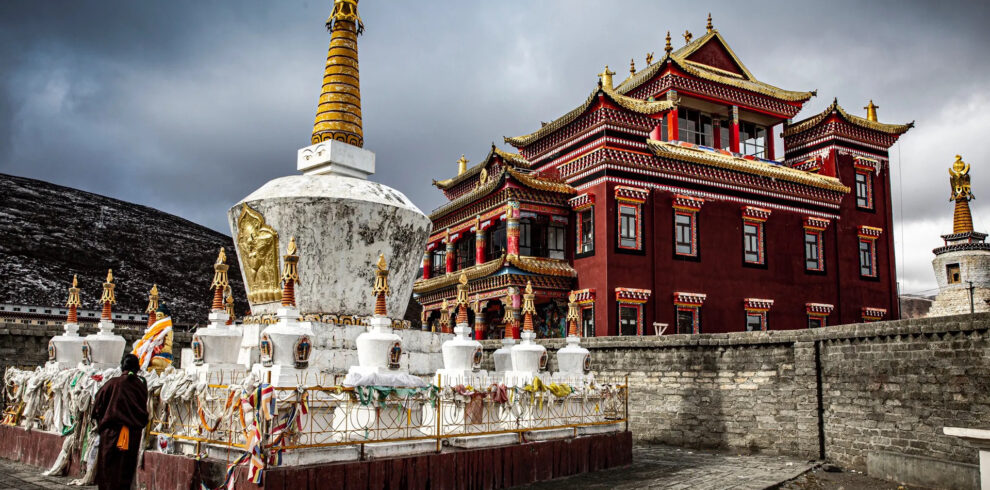
Arrive Xining by air plane or train. The largest city on Tibetan plateau. where you’ll find your guide ready and waiting to transfer you from the airport or train station to Hotel. If time allows, visit Tibetan culture and medicine Museum. Where you will have chances to see the world’s longest Thangka painting.
In the morning you will drive to Zhangye, On the way, we will pass Qilian grassland and Qianlian mountain range. On your arrival in Zhangye, we will visit Dafo temple. Dafo Temple is a grand temple with a history of more than one thousand years and was built by Emperor Liu Yan in the Southern Han dynasty. It has been praised as one of the "Five Largest Temples of Guangzhou" in history.
In the morning drive to Zhangye Danxia Geopark, also named as the Rainbow Mountains China, enjoys he honors of "The world's top ten magical geographical wonders", is the best place for photography. Rainbow Mountains are magnificent with gorgeous colors, which developed at about 200 million years ago. If time allows, we will also visit Mati temple, a Cave temple built in the Northern Liang Dynasty era, with 500 Buddha statues & numerous frescos.
Drive from Zhangye to Jiayuguan, upon your arrival in Jiayuguan, continue the sightseeing to renowned underground gallery Weijin Tombs. There we can enjoy lifelike and succinct wall paintings covering a wide range of subjects including politics, economies, culture, military affairs, folk customs, and science and technology during the Wei and Jin periods.
Jiayuguan is the perfect place to get to grips with your Silk Road history. Visit the Jiayu Fortress and take a walk on the western extremes of the magnificent Great Wall for panoramic views over the starkly beautiful Gobi Desert.
After breakfast, driving to Eastern Thousand Buddha caves. is a series of rock cut Buddhist caves, of the twenty-three caves excavated from the conglomerate rock, eight have murals and sculptures dating from the Western Xia and Yuan dynasty; many of the statues were reworked during the Qing dynasty. Note: In the event that the Eastern Thousand Buddha Caves are closed for renovation, our itinerary will be adjusted to include a visit to the Yulin Caves instead. Afterwards drive to Dunhuang.
After breakfast, visit the world famous Mogao Grottoes, which was designated as a world cultural heritage by UNESCO for its 1600 years accumulated cultural, architectural, and art treasures., a monk had witnessed onsite a vision of thousand Buddhas under showers of golden rays. Thus inspired, he started the caves construction work that spanned ten dynasties. Mogao Caves are commonly known as the Caves of a Thousand Buddhas.
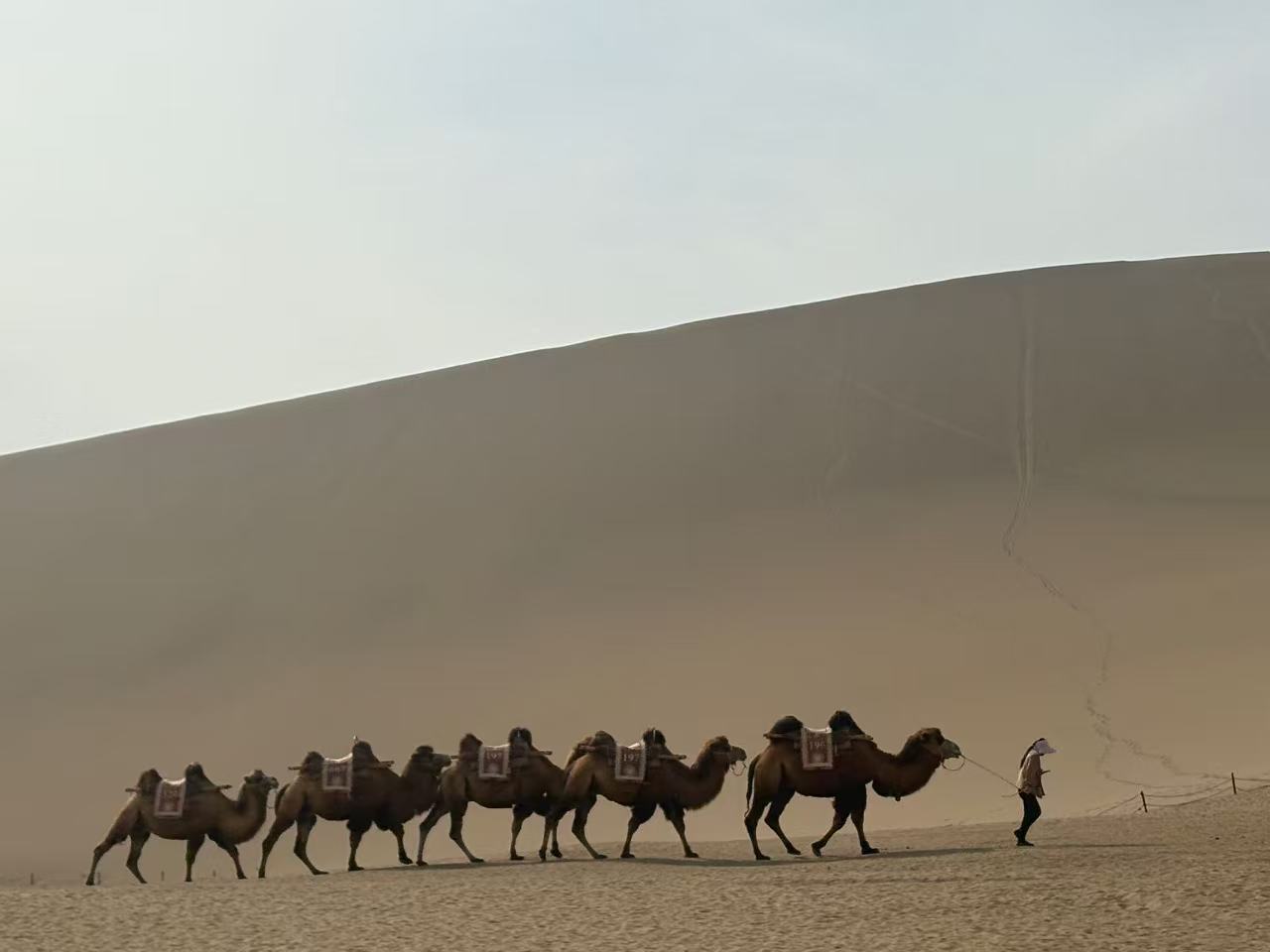
After breakfast, Visit Echoing Sand Mountain and Cresecent Lake, where you can ride the camels for 40mins to experience the beautiful desert scenery in the sunset.
After breakfast, driving across the largest Yardan landform in the China. Because of strong water corrosion and fierce wind erosion, aseries of parallel ditches and ditch ridges have formed in the clay rock area, which looks loke“buildings”and“alleys”in the city. Hami ,leaning against the Tianshan Mountains in the north and facing vast desert in the south, is situated in the eastern part of Xinjiang.The special local products, such as Hami Melon, big Chinese date of Wupu, hop, etc.,
Today, we will drive Turpan and before we arrive Turpan we will visit Bezeklik Thousand Buddha Caves has a history of over 1500 years. It reflects the glory of Gaochang Kingdom in ancient times in Turpan. As one of the largest grotto sites in Xinjiang, Bezeklik Caves is famous for the brightly-colored murals and is a treasure house of Buddhist culture and art. . After lunch we will drive to one of the centers of the Uighur cultures. Visit the oldest Uighur village Tuyoq Village located in the very center of Flaming Mountain Canyon. It used to be the holy site of Buddhism and Islam. The village consists of four parts: Canyon scenery, Maza tomb and the old buildings of the ancient village.
Our first stop is Tuyoq Valley, an ancient oasis-village. head up to the Karez Well irrigation system that produce the best melons and grapes in China. Following is the visiting to Sugong Minaret, a conduit for cultural exchange between different ethnic and religious groups. Afterwards visit Jiaohe Ruins, resembles Pompei, but 300 years older. a Chinese archaeological site found in the Yarnaz Valley, 10 km west of the city of Turpan and a natural fortress located atop a steep cliff on a leaf-shaped plateau between two deep river valleys where you can experience the way of life of the Uygur ancestors.
We will drive 1.5 hours to entrance of the Heavenly Lake about o8:30.following is the 40-minutes shuttle bus twisting through the picturesque Tianshan mountains to the edge of the Lake.EitherTrek around the lake,enjoy the boating cruise,or even take the cable car to the explore the Maya Mountain for the incredible view/of Bogoda Peak. Back to Urumqi afterwards.. If time allowed,you will visit Grand International Bazaar and have dinner there.
Drive to Korle, enjoy the beautiful scenery and drive to Korla, known as the "City of Pears" and the "City of Petroleum". Visit the Iron Gate upon arrival which was a very important pass in the ancient Silk Road. and then Walking along the Peacock River after dinner to feel the local’s city life style.
We will drive Kuqa and take you to visit the Kuqa Mosque, which is the second Mosque in Xinjiang. Stroll around Kuqa Old Town will make you have an unforgettable memory. Kizil Grottoes, which is a typical representative of Qiuci Grottoes. And then visit the Tianshan Great Canyon, which is the excellent geological park all over the world. It recorded the whole process of crustal movement in Xinjiang during the past 400 million years.
We will drive to Subash Old town and visit Subash Temple ruins and Simsim caves near. The Subash Buddhist Ruins are ancient, 3rd-century "ghost city" ruins that were once a bustling Silk Road hub. and The Simsim Caves (also known as Senmusaimu Caves) are an important complex of ancient Buddhist rock-cut temples located in the Kuqa (Kucha) region of Xinjiang. They are a significant, though often overshadowed, part of the Buddhist heritage along the Northern Silk Road.
Driving along the Taklamakan Desert Highway, It is the longest and earliest desert highway in the world that runs through the floating desert. It is also the center of the ancient Silk Road.
We will visit Hotan Museum, built at South Tanai Road, Khotan City in 1991, the museum has a floor space for exhibition of about 200 square meters. Besides wooden tablets, the main exhibition “Khotan Historical Relics Exhibition” displays potteries, wooden wares, textiles, sculptures and building components from ancient sites and tombs in Khotan area, totaling over 200 specimens. Among them the Kharosthi and Hotanese tablets, wool fabrics and various sculptures are of distinctive Khotan feature. They mirror the important position and role Hotan occupied and played on the Silk Road. Next, we are going to visit The Atlas Silk Workshop is open every day and tours are free, and demonstrate the entire process from cocoon to weaving. Which has a showroom where you can buy Atlas silk by the meter or made into scarves, bags, dresses and other items.
you will visit the Yarkent King Tombs, This city forms an oasis at the western end of the Taklimakan desert as a trade center. Mainly inhabited by Turkic-speaking Muslims, it has more than 120 mosques. The Uygurs are excellent at dancing. The "12 Mukams" (opera) is an epic comprising more than 340 classic songs and folk dances. After liberation, this musical treasure, which was on the verge of being lost, was collected, studied and recorded by Amannisha who is the concubine of Yarkent King.She died aged 34. stroll around the Yarkent Old Town, to explore the local lifestyle.
Kashgar is about 250km from the Yecheng and is the largest oasis in the whole China. The road condition is very smooth with black tar road that runs through the edge of Taklamakan desert. The scenery is very excellent with grey-black rocks and sand dunes composing the major features of the landscape of Taklamakan.
Full-day excursion of Kashgar. Pay a visit to Id Kah Mosque, the largest Mosque in China and the most sacred mosque for the locals to practise their Islamic activities at 09:00. Continue the visiting to Old Town at 10:30 with the open ceremony of Maxilap show. Continue to visit Handicraft street, gathered hundreds of handicraft workshops, which has become a boutique exhibition for handicraft in Kashgar and Central Asia. Also visit The Mausoleum of Yusuf Khass Hajib in Kashgar, China, is a 11th-century Muslim shrine and significant cultural site dedicated to the Uyghur poet and philosopher who wrote the "Kutadgu Bilig" (Wisdom of Happiness)
In the morning, Driving through China and Pakistan highway and enjoy the landscape of Pamirs Plateau.. we stop in the Opal village to visit the traditional bustling bazaar. On the way, you can experience beautiful Karakul Lake where the herds of livestock around the lakeside are reflected in lake Kirghiz herdsmen usually settle down and graze their herds before shuttling you onward to Taxkorgan.
Driving back to Kashgar. On the way, you will visit the Stone Fortress. The city is oval in shape and the city walls were built with sun-dried bricks on stone foundation. It is 1285 meters in circumference outside. Walking around the pastureland to see Local Tajiks customs.
After breakfast in the hotel you will have freetime to explorer this city by yourself. Thereafter, you will end your enjoyable tour in Southern Xinjiang, and back to Urumqi to catch the international flight to your destination.