The Litang Horse Racing Festival is one of the most famous traditional festivals in the Tibetan Plateau, held annually in Litang County, part of the Garzê Tibetan Autonomous Prefecture in Sichuan Province, China. It usually takes place in early August and lasts for about a week, attracting thousands of visitors and participants from all over Tibet and neighboring regions.
Historical Significance:
The festival has a deep-rooted connection to the Khampa Tibetans, who have traditionally been skilled horsemen. Horse riding is a central part of the Khampa culture, and the festival honors the importance of horses in Tibetan life, particularly in the nomadic lifestyle of the region. It also celebrates the courage and strength of the Khampa warriors, who were historically known for their mastery of horseback riding.
Horse Racing and Competitions:
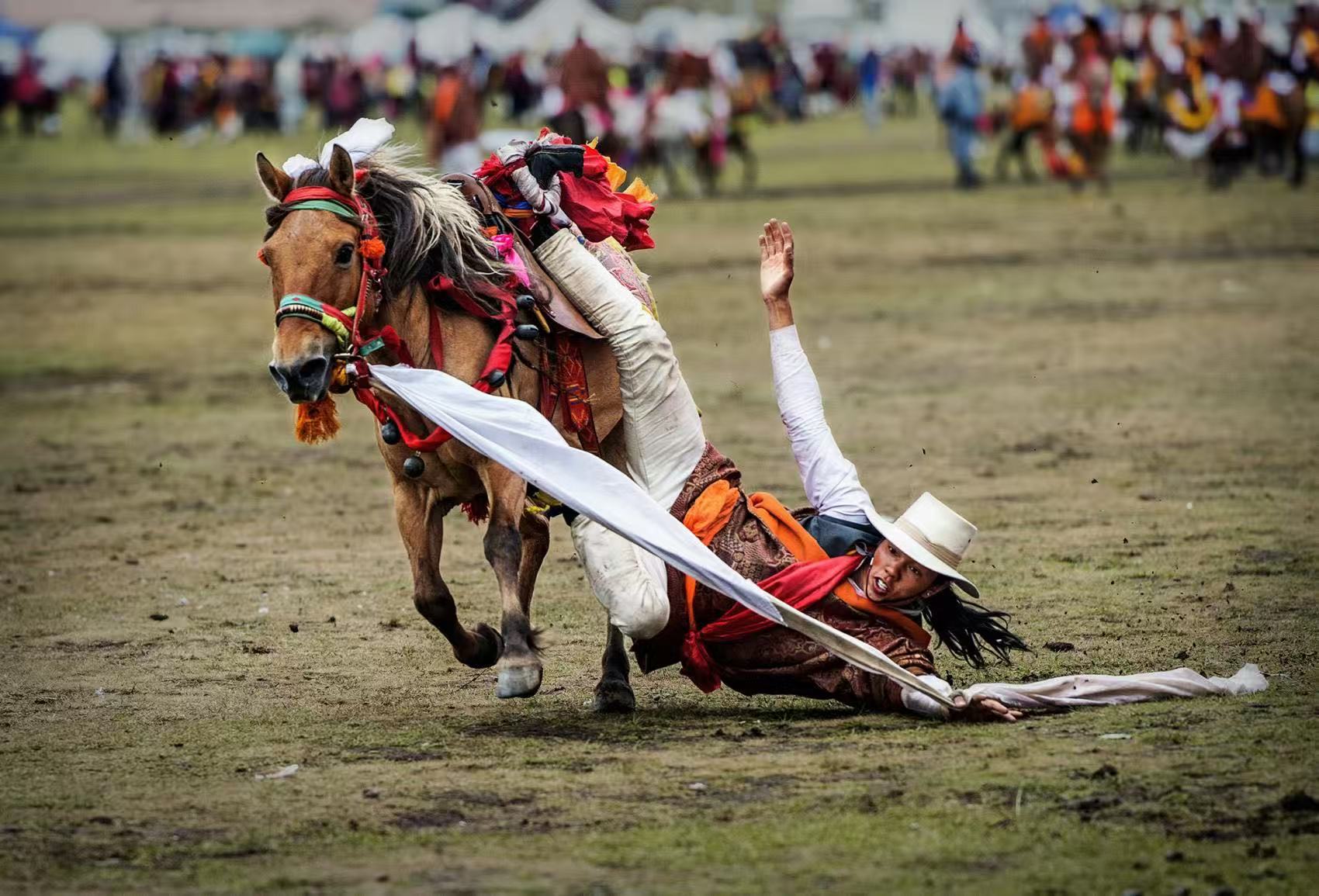
The highlight of the festival is the thrilling horse racing events, where participants compete in various races, demonstrating their equestrian skills. Riders showcase their prowess in long-distance races, speed races, and stunt performances like shooting arrows or picking up objects from the ground while galloping at full speed. Some riders perform daring acrobatic tricks, showcasing their incredible balance and control over their horses.
Traditional Tibetan Clothing:
During the festival, participants and spectators alike wear their finest traditional Tibetan clothing. Men and women dress in brightly colored chubas (Tibetan robes), often adorned with elaborate jewelry made of silver, turquoise, and coral. The horsemen, in particular, wear striking outfits, with some donning fur-lined robes and elaborate headdresses, reflecting the proud warrior heritage of the Khampas.
Cultural Performances:
In addition to horse racing, the festival is a vibrant celebration of Tibetan culture. There are traditional Tibetan dances, singing performances, and Tibetan opera performances (known as lhamo), providing a rich cultural experience for visitors. The festival serves as a platform for locals to showcase their talents and maintain their cultural traditions, with performances accompanied by traditional Tibetan instruments like the dranyen (Tibetan lute) and gyaling (a type of oboe).
Monastic Involvement:
The Litang Horse Racing Festival has religious elements as well, with monks from local monasteries performing rituals and blessings to ensure the success of the event and the well-being of participants. Monastic leaders often preside over the festival, and the opening ceremonies include religious prayers and offerings to the Buddhist deities.
For the local community, the festival is not only a celebration of Tibetan culture but also an important social and economic event. It provides an opportunity for nomadic and farming families from remote areas to come together, celebrate, and trade goods. Stalls selling local handicrafts, Tibetan jewelry, yak butter, and clothing spring up around the festival grounds, contributing to the local economy.
In recent years, the Litang Horse Racing Festival has gained popularity among tourists, both from China and abroad. Visitors are drawn to the spectacle of the horse races, the colorful displays of Tibetan culture, and the beautiful landscape of the Litang grasslands. The presence of tourists has added a new dimension to the festival, with local authorities promoting the event as a key cultural tourism attraction.
While the core traditions of the Litang Horse Racing Festival remain intact, it has evolved over time, incorporating modern elements like musical performances and more structured events. However, it still remains a vital part of Tibetan life in the region, celebrating both the nomadic heritage and the importance of horses in Tibetan culture.
Conclusion:
The Litang Horse Racing Festival is a lively and culturally rich event that offers a fascinating glimpse into the heart of Tibetan nomadic traditions. With its thrilling horse races, vibrant cultural displays, and deep spiritual roots, the festival continues to be one of the most important celebrations in the Tibetan calendar, drawing both locals and visitors to the high-altitude plains of Litang each year.
Right Aligned Image
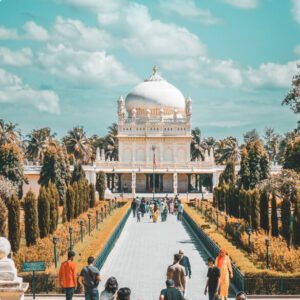
Images may be two-dimensional, such as a photograph, screen display, and as well as a three-dimensional, such as a statue or hologram. They may be captured by optical devices – such as cameras, mirrors, lenses, telescopes, microscopes, etc. and natural objects and phenomena, such as the human eye or water surfaces. The word image is also used in the broader sense of any two-dimensional figure such as a map, a graph, a pie chart, or an abstract painting. The word image is also used in the broader sense of any two-dimensional figure such as a map, a graph, a pie chart, or an abstract painting. The word image is also used in the broader sense of any two-dimensional figure such as a map, a graph, a pie chart, or an abstract painting.
Left Aligned Image
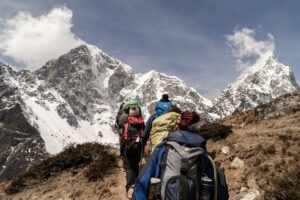
The word image is also used in the broader sense of any two-dimensional figure such as a map, a graph, a pie chart, or an abstract painting. In this wider sense, images can also be rendered manually, such as by drawing, painting, carving, rendered automatically by printing or computer graphics technology, or developed by a combination of methods. Images may be two-dimensional, such as a photograph, screen display, and as well as a three-dimensional, such as a statue or hologram.
A volatile image is one that exists only for a short period of time. This may be a reflection of an object by a mirror, a projection of a camera obscura, or a scene displayed on a cathode ray tube. A fixed image, also called a hard copy.
Heading One
Heading Two
Heading Three
Heading Four
Heading Five
Heading Six
Blockquote
The blockquote is used to indicate the quotation of a large section of text from another source. It can be as long or as short as you’d like!
Those of us that had been up all night were in no mood for coffee and donuts, we wanted strong drink. We were, after all, the absolute cream of the national sporting press.
Table Styles
| BEATLE | INSTRUMENT | SONG |
|---|---|---|
| John Lennon | Guitar | A Day In the Life |
| George Harrison | Guitar | Old Brown Shoe |
| Paul McCartney | Bass | Helter Skelter |
| Ringo Starr | Drums | Don’t Pass Me By |
Code Formatting
pre {
    position: relative;
    background: #f7f7f7;
    font-family: "Courier 10 Pitch", Courier, monospace;
    font-size: 15px;
    font-size: 1.5rem;
    line-height: 1.6;
    margin-bottom: 1.6em;
    padding: 1.6em;
    overflow: auto;
    max-width: 100%;
    tab-size: 4;
}
Mixed List Items
- Unordered list item one
- Unordered list item two
- Ordered list item one
- Ordered list item two
- Unordered list item one
- Unordered list item two
- Ordered list item one
- Ordered list item two
- Ordered list item three
- Unordered list item three
- Ordered list item three
- Unordered list item three